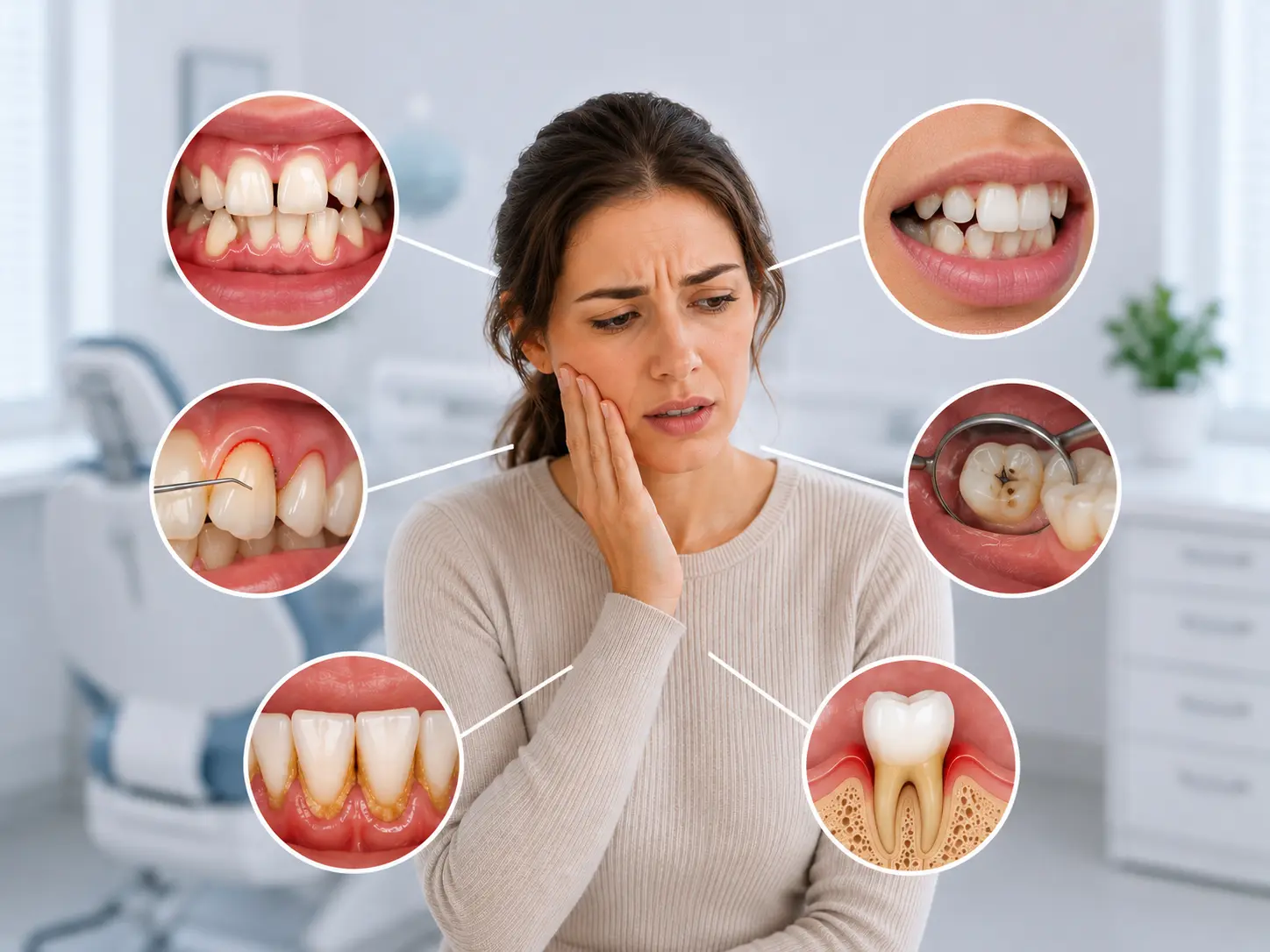

Crooked teeth are more than a cosmetic concern. For many people, they affect how comfortably you chew, how easily you clean your teeth, and how confident you feel about your smile.
If you’ve ever wondered whether having crooked teeth is bad or if it ok to have crooked teeth, you’re not alone. These are some of the most common questions dentists hear from patients of all ages.
From slightly crooked teeth to more complex bite problems, misalignment can quietly impact oral health over time.
People with crooked teeth may experience difficulties chewing, frequent cavities, jaw discomfort, or speech changes without realising that their bite is the root cause.
Understanding the difference between crooked teeth and straight teeth helps explain why alignment matters for long-term dental health.
In this guide, you’ll learn:
- What malocclusion is and how it relates to crooked teeth
- The different types of malocclusion and bite problems
- Common symptoms and causes of crooked teeth
- Health issues linked to crooked top teeth and crooked bottom teeth
- A clear comparison of crooked teeth vs straight teeth
- Treatment options, including braces and surgery
- How Lincolnwood Family Dental helps patients with alignment concerns
Table of Contents
ToggleWhat is Malocclusion?
Malocclusion is a condition where the upper and lower teeth do not align properly when the mouth is closed. It commonly occurs due to crooked teeth, jaw misalignment, or dental crowding, which affect how the bite fits together.
People with malocclusion may have crooked top teeth, crooked bottom teeth, or both. In some cases, the jaws do not align correctly, affecting bite balance and tooth contact.
Most cases of malocclusion are hereditary. People with crooked teeth are more likely to have close family members with similar alignment issues. However, malocclusion can also develop due to:
- Tooth loss
- Dental trauma or injury
- Shifting teeth over time
Many patients ask: Are crooked teeth bad, or is it acceptable to have crooked teeth? Untreated malocclusion can lead to oral health problems that worsen with age. These include:
- Higher risk of tooth decay
- Increased chances of gum disease
- Difficulty chewing food properly
- Speech-related challenges
Crooked teeth can trap plaque and bacteria in hard-to-reach areas, which often explains persistent odour problems, as discussed in what causes bad breath even after brushing.
What are the Types of Malocclusion?
Crossbite
The upper teeth fit inside the lower teeth when the mouth is closed. This can affect both upper and lower teeth.
Open Bite
The upper and lower front teeth do not touch when biting down. Even slightly crooked teeth can cause chewing and speech difficulties.
Overbite
A deep vertical overlap where the upper teeth cover the lower teeth more than normal. Severe overbites are among the most severe forms of malocclusion if left untreated.
Overjet
The upper front teeth extend outward beyond the lower front teeth. This is often referred to as “buck teeth” and affects bite balance when comparing crooked versus straight teeth.
Underbite
The lower front teeth extend past the upper front teeth, changing facial appearance and bite function.
Symptoms of Malocclusion
People with crooked teeth may experience mild to severe symptoms, depending on the degree of malocclusion and the type of bite.
Common symptoms of malocclusion include:
- Cheek biting caused by improper tooth contact
- Difficulty biting or chewing food properly
- Lisping or other speech-related issues
- Visibly misaligned teeth, including crooked top teeth or crooked bottom teeth
- Mouth breathing due to poor jaw or bite positioning
What Causes Crooked Teeth
Crooked teeth develop due to a combination of genetic, developmental, and environmental factors that affect how teeth and jaws grow. Both baby teeth and permanent teeth can erupt crooked or shift out of position over time.
Baby teeth may appear crooked when they are too small to fill the available space in the mouth. While slightly crooked teeth in early childhood do not always lead to problems, crowded baby teeth can increase the chances of misaligned permanent teeth.
Common causes of crooked teeth include:
Prolonged oral habits: Thumb sucking, pacifier use, bottle feeding, tongue thrusting, and mouth breathing can push teeth out of position and affect jaw growth.
Genetics and heredity: People with crooked teeth often inherit traits such as crowded teeth, overbite, or underbite from parents or close relatives.
Early tooth loss: Tooth decay or trauma that causes baby teeth to fall out too early can lead to permanent teeth growing in at an angle rather than straight.
Jaw size changes: Modern diets of soft, processed foods require less chewing, which may contribute to smaller jaw size and crowded or misaligned teeth.
Poor dental care: Untreated cavities and gum disease can cause teeth to shift, raising concerns about whether crooked teeth harm long-term oral health.
Poor nutrition: Inadequate nutrition, especially during childhood, can impair tooth development and increase the risk of misalignment.
Facial injury: Trauma to the face or mouth can displace teeth, sometimes resulting in the worst crooked teeth cases if left untreated.
Straight Teeth vs Crooked Teeth
Aspect | Crooked Teeth | Straight Teeth |
Alignment | Teeth are crowded, rotated, or uneven | Teeth are properly aligned and evenly spaced |
Oral Hygiene | Harder to clean between teeth | Easier to brush and floss effectively |
Risk of Tooth Decay | Higher risk due to plaque buildup | Lower risk with proper hygiene |
Gum Health | Increased risk of gum disease | Healthier gums with better access for cleaning |
Chewing Ability | May cause difficulty or discomfort while chewing | Allows efficient and comfortable chewing |
Tooth Wear | Uneven pressure can cause excess wear | Even pressure reduces wear and tear |
Jaw Strain | Can contribute to jaw pain and TMJ issues | Lower risk of jaw strain |
Speech | May affect sound pronunciation in some cases | Supports clear speech |
Appearance | May cause self-consciousness in people with crooked teeth | Often associated with confidence |
Long-Term Oral Health | Problems may worsen over time if untreated | Better long-term oral health outcomes |
What are the Issues Caused by Crooked Teeth
Misaligned teeth can make chewing difficult and painful, affecting how food is broken down. This highlights why many patients ask whether crooked teeth are harmful when eating causes discomfort.
When crooked teeth make daily cleaning difficult, professional care becomes more important, as explained in what’s the difference between a regular dental cleaning and a deep cleaning.
Common issues caused by crooked teeth include:
Periodontal disease: Crowded or misaligned teeth are harder to clean, increasing the risk of tooth decay and gum disease. Untreated gum disease can progress to periodontitis, leading to bone and tooth damage.
Chewing and digestion problems: Improper bite alignment affects chewing efficiency, which may contribute to digestive issues.
Excess wear and jaw strain: Uneven tooth contact can cause cracked teeth, gum irritation, jaw muscle strain, temporomandibular joint disorders, and chronic headaches. These problems are more common in the most severe cases of crooked teeth.
Speech difficulties: Misaligned teeth can interfere with sound formation, leading to speech challenges.
Self-esteem concerns: Some individuals feel self-conscious about crooked top or bottom teeth, which can lead to reduced smiling, social avoidance, and lower confidence.
Because misaligned teeth increase the risk of decay, early treatment options covered in When Do You Need a Dental Filling and What Are Your Material Options may become necessary.
How to Straighten Crooked Teeth?
Crooked teeth can be straightened through orthodontic or surgical treatment, depending on the severity of alignment, gum health, and jaw structure. A dentist or orthodontist helps determine the right option for people with crooked teeth, whether the concern is functional or cosmetic.
Before starting orthodontic treatment, dentists rely on imaging to assess alignment and bone health, as explained in “Why are dental X-rays important?
Common treatment options include braces and surgery, depending on the severity of the crookedness.
Braces
Braces are suitable for children, teens, and adults with healthy teeth and gums. Treatment typically lasts 2 to 3 years, depending on the extent of correction required.
Metal braces: Fixed brackets, bands, and wires correct complex alignment issues. Modern designs are smaller, more comfortable, and customizable. Cost: $3,000–$7,500
Ceramic braces: Tooth-colored brackets offer a less noticeable option but may stain or break more easily. Cost: $3,500–$8,000
Invisible braces (Invisalign): Clear, removable aligners for teens and adults. Not recommended for severe alignment issues involving crooked top teeth or crooked bottom teeth. Cost: $3,500–$8,500
Lingual braces: Braces placed on the back of teeth, hidden from view. They are more difficult to clean and are not ideal for severe cases. Cost: $5,000–$13,000
Teeth-Straightening Surgery
Surgical treatment is an option for crooked teeth when orthodontic correction alone may not be sufficient. It can also reduce the amount of time people with crooked teeth need to wear braces.
An orthodontist may recommend minor oral surgery to reposition the bones and gums that support the teeth. This helps improve alignment when tooth movement alone cannot achieve proper results.
In more complex cases, orthognathic surgery may be advised. This procedure realigns the jaw and is typically recommended when crooked top or bottom teeth affect chewing or speech.
Surgical correction is usually considered in the worst crooked teeth cases rather than for slightly crooked teeth. Costs vary based on the procedure type, location, and health insurance coverage, which helps determine whether crooked teeth are severe enough to require surgical treatment.
Why Choose Lincolnwood Family Dental for Malocclusion Treatment
Lincolnwood Family Dental provides personalised care for crooked teeth and malocclusion using a gentle, honest, and experienced approach. With over 700 five-star reviews, the practice is trusted by people with crooked teeth seeking long-term oral health solutions.
At Lincolnwood Family Dental, treatment plans are tailored to each patient, whether the concern is slightly crooked teeth or more complex bite issues. The women-led team focuses on family-centred care that supports comfort, clarity, and confidence.
Comprehensive dental services include:
- Preventive Dentistry
- Invisalign and Cosmetic Dentistry
- Crowns, Veneers, and Dental Implants
- General and Emergency Dentistry
- Kids Dentistry
- Dentures and Partials
- Wisdom Teeth Removal
These services help address concerns about crooked bottom teeth, crooked top teeth, and bite alignment, making it easier to understand whether crooked teeth are harmful to oral health.
Lincolnwood Family Dental accepts all PPO insurance plans and helps patients maximise their benefits. For those without insurance, new-patient specials at $19, $79, and $89 are available for a limited time.
With advanced technology, a patient-first mindset, and comprehensive care, the practice helps patients understand the difference between crooked and straight teeth and choose the right treatment path.
Frequently Asked Questions
Is having crooked teeth bad for oral health?
Yes, crooked teeth can increase the risk of cavities, gum disease, chewing problems, and jaw strain if left untreated.
Is it ok to have crooked teeth if they don’t hurt?
Even painless crooked teeth can, over time, cause hidden issues such as plaque buildup or uneven tooth wear.
Can slightly crooked teeth still cause problems?
Yes, slightly crooked teeth can still affect cleaning, bite balance, and gum health.
Are crooked bottom teeth harder to clean than crooked top teeth?
Both can be difficult to clean, but crowded bottom teeth often trap more plaque due to limited space.
What are the worst crooked teeth cases?
The worst crooked teeth usually involve severe crowding, overbite, underbite, or jaw misalignment that affects chewing or speech.