
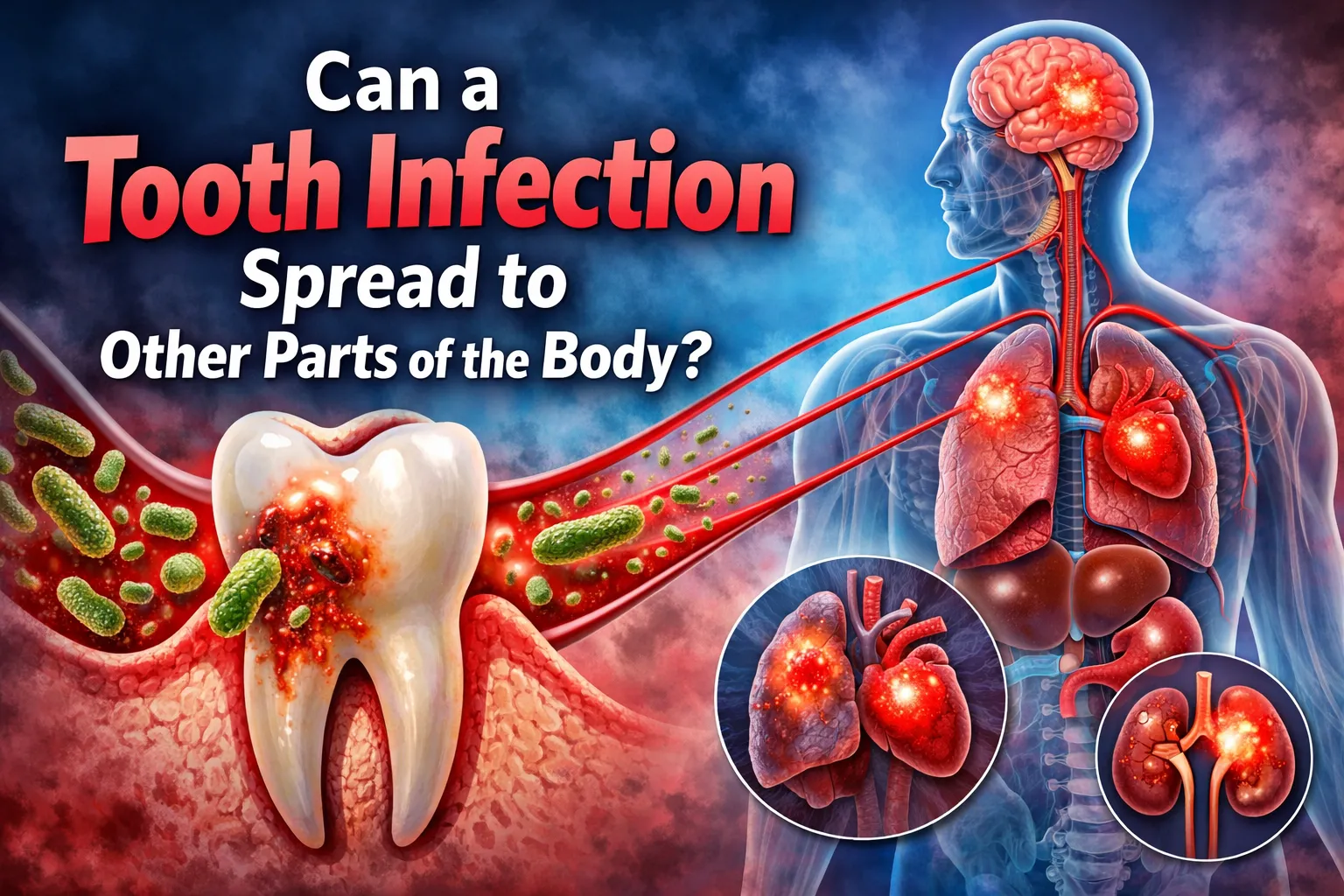


A tooth infection may start small, but it should never be ignored. Many people delay treatment, hoping the pain will fade. In reality, an untreated tooth infection can become dangerous. Bacteria from an infected tooth can move beyond the mouth and affect other parts of the body. This raises an important question that many patients ask. Can a tooth infection spread and cause serious health problems? In this blog, we explain how tooth infections form, how they can spread, and the warning signs to watch for. Understanding these risks helps you act early and protect your overall health.
Table of Contents
ToggleWhat Is a Tooth Infection?
A tooth infection happens when bacteria enter the inside of a tooth. This often leads to a pocket of pus called an abscess. The pus forms as the body tries to fight the infection.
There are different types of tooth infections. One common type is a periapical abscess. It forms at the tip of the tooth root. Another type is a periodontal abscess, which develops in the gums near the tooth. This section focuses on periapical infections.
A periapical tooth infection usually starts with an untreated cavity. It can also happen after a tooth injury or previous dental treatment. When bacteria reach the inner pulp of the tooth, infection begins. This causes swelling, pressure, and pain. In some cases, infection-related bacteria can also contribute to persistent bad breath even after brushing.
If left untreated, the infection can spread. Over time, the tooth infection can spread beyond the tooth. An untreated tooth infection increases the risk of serious problems.
Dentists treat a tooth infection by removing the infection and draining the abscess. In many cases, a root canal can save the tooth. Sometimes, the tooth needs to be removed if the damage is severe.
Can a Tooth Infection Spread to Other Parts of the Body?
Yes, a tooth infection can spread to other parts of the body if left untreated. The mouth naturally contains bacteria from food, saliva, and plaque. Sometimes, these bacteria enter a tooth or move below the gum line. This can lead to a tooth infection or an abscess.
An abscess is a pocket of pus filled with bacteria. It forms when the body tries to fight the infection. In many cases, dentists can treat a tooth infection easily when caught early.
Problems start when treatment is delayed. An untreated tooth infection allows bacteria to grow and travel. This is when a tooth infection spreading to the body becomes a real risk. Many people ask, ” Can a tooth infection spread beyond the mouth. The answer is yes.
The infection can spread to nearby bone, causing osteomyelitis. It can reach the sinuses and affect blood vessels, leading to cavernous sinus thrombosis.
It may also cause cellulitis, which involves the skin and tissue beneath it. In rare cases, the infection can lead to sepsis, a serious and life-threatening condition.
How Does a Tooth Infection Spread in the Body?
When a tooth infection is left untreated, it does not remain confined to one place. Bacteria continue to multiply and push beyond the tooth. This is how tooth infection spreads to the body.
The infection can first spread to the jawbone. From there, it may spread to the soft tissues of the face and neck. Swelling and pain often increase at this stage. These are clear signs of a tooth infection that should not be ignored.
In rare cases, the infection can travel through the bloodstream. When this happens, a tooth infection can spread to vital organs. It may reach the heart and cause endocarditis. It can also affect the brain, leading to bacterial meningitis. These conditions are serious and require emergency care.
Some people are at a higher risk of infection spreading. Smoking increases the chance of developing a tooth abscess. Dry mouth allows bacteria to grow faster due to low saliva. Poor oral hygiene raises bacterial levels in the mouth. A weakened immune system also makes it harder for the body to fight infection.
Signs and Symptoms of Tooth Infection Spreading to the Body
It is rare for a tooth infection to spread beyond the mouth. However, when it does happen, the effects can be serious. An untreated tooth infection can allow bacteria to move into other parts of the body.
There are clear warning signs to watch for. These are important signs of tooth infection spreading to the body and should never be ignored.
Common symptoms of a tooth infection spreading to the body include worsening pain in the tongue or mouth. Swelling may appear in the face, cheeks, or neck. Some people experience difficulty swallowing or opening their mouths fully. This condition is called trismus.
Other tooth infections include itching or burning sensations on the skin. Nausea and vomiting may occur. Fever is also a common sign that the body is fighting a spreading disease. Severe headaches can signal that the infection has spread beyond the tooth.
Some people may confuse early warning signs with issues like understanding tooth sensitivity, which is why persistent or worsening symptoms should never be ignored.
Breathing problems, confusion, or changes in vision are serious red flags. Drooping eyelids or double vision may also occur. These are critical symptoms of tooth infection spreading to the body.
If a tooth infection spreads to the brain, symptoms become more severe. These include intense headaches, blurred vision, confusion, trouble speaking, seizures, or weakness in the arms or legs.
Anyone with a tooth infection who notices these signs should seek emergency medical care immediately. Early action can prevent life-threatening complications.
What Parts of the Body Can a Tooth Infection Affect?
An untreated tooth infection can spread beyond the mouth and affect many parts of the body. Below are the key areas that may be impacted when a tooth infection spreads to the body if it is not treated in time.
Jaw and Face
The infection can spread into the jawbone, leading to a bone infection. Swelling and deep facial pain are common symptoms of a tooth infection at this stage. Jaw problems caused by infection can also worsen existing alignment issues, which is why crooked teeth and poor oral structure can increase the risk of oral health complications over time.
Lymph Nodes
Lymph nodes under the jaw or in the neck may become swollen and painful. This is one of the early signs of tooth infection spreading to the body.
Throat and Neck
Severe swelling can develop under the tongue or jaw. This can make swallowing or breathing difficult and requires urgent care.
Bloodstream
Bacteria may enter the blood and cause sepsis. This is a life-threatening condition affecting the entire body.
Brain
In rare cases, a tooth infection can spread to the brain. This may lead to meningitis, blood clots, or brain abscesses.
Heart
Infection can travel to the heart and inflame the heart lining. This condition is known as endocarditis.
How Dentists Treat Tooth Infections
The main goal of treatment is to remove the infection and stop it from spreading. Early treatment also helps prevent tooth infection from spreading to the body. Dentists may use one or more of the following treatments, depending on the severity of the infection:
Drain the Abscess
The dentist makes a small opening in the abscess. This allows the pus to drain out. The area is then cleaned with a saltwater solution. In some cases, a small drain is placed to keep the area open while the swelling subsides.
Perform a Root Canal
A root canal removes the infected tissue inside the tooth. The dentist cleans and seals the inner chamber and roots. This helps eliminate the tooth infection and save the tooth. A crown may be placed to strengthen a tooth, especially a back tooth.
Extract the Tooth
If the tooth is too damaged to save, it may need to be removed. The dentist also drains the abscess to clear the infection fully. This helps prevent further tooth infection.
Prescribe Antibiotics
Antibiotics may be needed if the infection has spread or is at risk of spreading. They are also used when a patient has a weakened immune system. Antibiotics help control the disease, but do not replace dental treatment.
When Should You See a Dentist Immediately?
You should see a dentist as soon as you notice signs of a tooth problem. Early care can stop a tooth infection from getting worse.
Book a dental appointment right away if you have tooth pain or a constant toothache. A red or swollen bump on the gums is another warning sign. In many cases, timely care, such as deep dental cleaning, can help control bacteria and prevent infections from becoming severe.
When Should You Go to the Emergency Room?
In some cases, a tooth infection becomes a medical emergency. You should go to the nearest emergency room if any of the following symptoms accompany a tooth infection:
- Fever of 100.4 degrees Fahrenheit or higher
- Difficulty swallowing
- Swelling in the face or jaw
- Confusion or trouble thinking clearly
- Rapid or elevated heart rate
How Lincolnwood Family Dental Helps Prevent and Treat Tooth Infections
Lincolnwood Family Dental offers complete dental care for the entire family. Regular checkups help detect cavities and gum disease before they turn into untreated tooth infections. Preventive dentistry plays a key role in stopping the spread.
For active infections, the team provides prompt treatment, including emergency dental care when needed. General dentistry services, such as root canals and extractions, help control infection and relieve pain.
Lincolnwood Family Dental also provides insurance guidance and CareCredit financing. This ensures treatment is not delayed due to cost. Timely care helps prevent tooth infection from spreading to the body and protects overall health.
Frequently Asked Questions
Can a tooth infection heal on its own?
No. A tooth infection needs dental treatment. Without care, it can get worse and spread.
How long can a tooth infection go untreated?
There is no safe time to wait. An untreated tooth infection can spread quickly in some cases.
Can antibiotics alone cure a tooth infection?
Antibiotics may temporarily control the infection, but dental treatment is still required.
Are tooth infections more dangerous for older adults?
Yes. Weaker immunity increases the risk of tooth infection spreading to the body.
Can a tooth infection come back after treatment?
Yes, if oral hygiene is poor or follow-up care is skipped. Regular dental visits help prevent this.