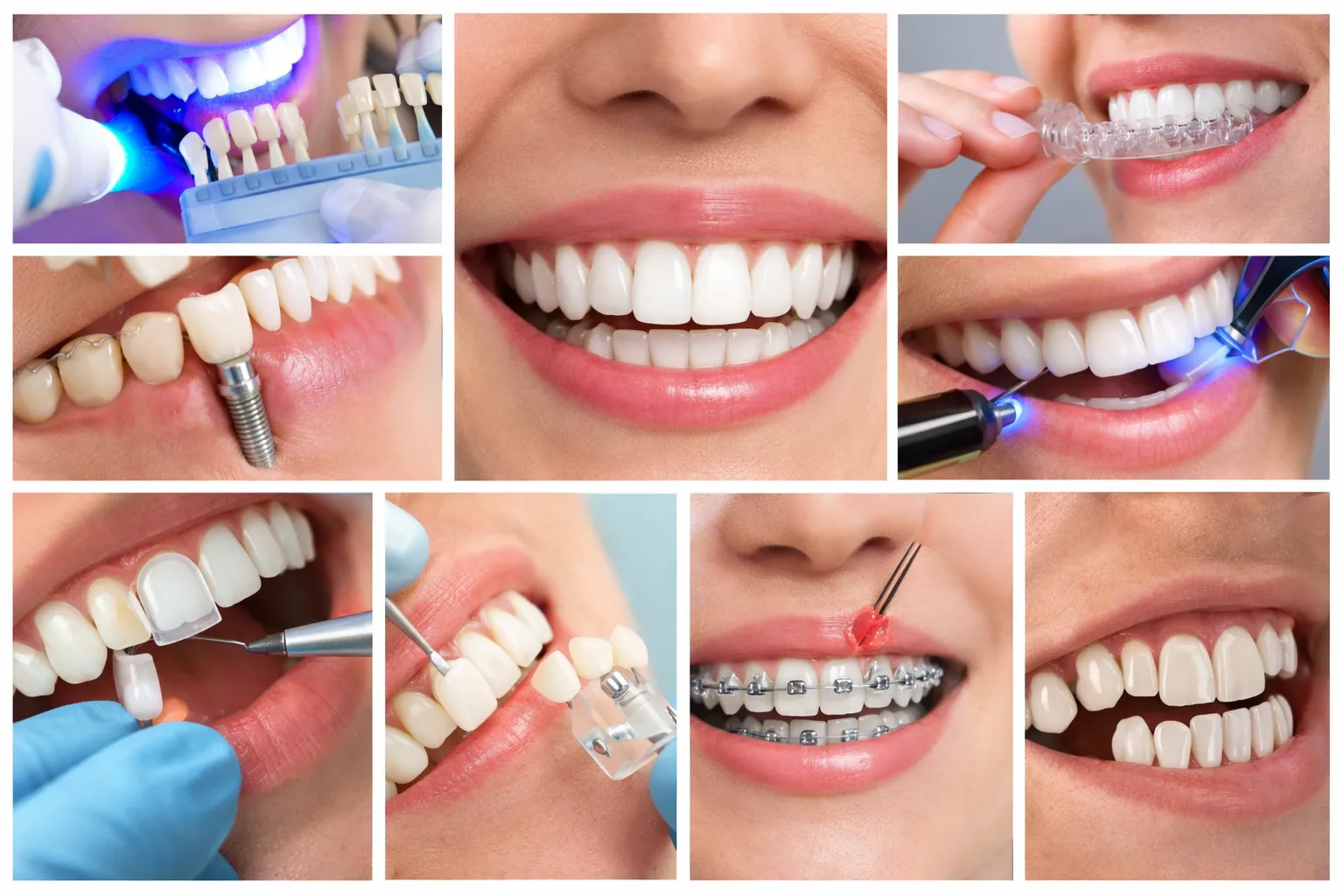


A smile makeover is a personalized plan that combines cosmetic and restorative dental treatments to improve your smile’s appearance and function. So what treatments are usually included in a smile makeover? It can involve teeth whitening, veneers, dental implants, clear aligners, or gum contouring, depending on your needs. This blog explains common smile makeover options, how a complete smile makeover works, expected costs, and the kinds of smile makeover before-and-after results you can expect.
Table of Contents
ToggleOverview of Dental Smile Makeover Costs
Treatment | Average Cost (USD) | Time Taken for Treatment |
Teeth Whitening | $500 – $1,000 | 1 visit (30–120 minutes) |
Dental Bonding | $100 – $600 per tooth | 1 visit (30–60 minutes per tooth) |
Dental Veneers | $900 – $2,500 per tooth | 2–3 visits over 2–4 weeks |
Dental Crowns | $1,000 – $3,000 per tooth | 1–2 visits (same day or 2–3 weeks) |
Gum Contouring | $200 – $3,000 | 1 visit (1–2 hours) |
Clear Aligners | $3,000 – $7,000 | 6–18 months |
Orthodontic Braces | $3,500 – $8,000 | 12–24 months |
Dental Implants | $3,000 – $6,000 per tooth | 3–9 months (including healing) |
Dental Restorations (Fillings, Bridges, Dentures) | $150 – $5,000+ | 1 visit to several weeks, depending on the type |
Teeth Whitening
Teeth whitening is one of the most popular treatments included in a smile makeover. It helps remove stains and brighten your natural tooth color. Whitening can be done at the dental office or at home, depending on your goals and tooth sensitivity.
Dentists use peroxide-based bleaching agents to whiten teeth. At-home kits usually contain 3% to 20% peroxide. In-office treatments use stronger solutions, ranging from 15% to 43%, for faster and more noticeable results.
How teeth whitening works
- Peroxide breaks down stains on the tooth surface and inside the enamel
- Stronger solutions whiten teeth faster, but must stay on for less time
- Longer exposure can increase tooth sensitivity and dryness
In-office vs at-home whitening
- In-office whitening delivers quicker and brighter results
- Teeth can appear three to eight shades whiter after treatment
- Some systems work in one long appointment, while others need multiple visits
- At-home kits work gradually and may not suit everyone
Teeth whitening does not change the color of crowns or tooth-colored fillings. A dentist can help decide the safest and most effective option.
Dental Implant
Dental implants are a long-term solution for replacing missing teeth in a smile makeover. They are small medical devices placed in the jawbone to support artificial teeth, such as crowns, bridges, or dentures. Implants restore both function and appearance, helping patients chew comfortably and smile with confidence.
When a tooth is lost due to injury or disease, it can lead to bone loss, speech issues, and changes in how you chew. Dental implants help prevent these problems and improve overall oral health and quality of life.
How dental implants are structured
- Implant body: Placed in the jawbone and acts like an artificial tooth root
- Abutment: Connects the implant body to the replacement tooth
- Restoration: The visible artificial tooth, such as a crown or bridge
Materials used in dental implants
- Most implants are made from titanium or zirconium oxide
- These materials are biocompatible and safe for the body
- Some systems may also use ceramic or metal alloys
- All materials follow strict ISO and ASTM safety standards
Dental Bonding
Dental bonding is a simple, effective smile makeover treatment that improves the appearance of chipped, uneven, or discolored teeth. It uses a tooth-colored composite resin to reshape or enhance your teeth. This treatment is often part of a cosmetic smile makeover because it is quick, painless, and usually completed in one visit. Dental bonding is reversible and conservative. It does not require removing much enamel.
What dental bonding can fix
- Change the shape or size of teeth
- Close small gaps and spaces
- Hide chips or minor cracks
- Cover tooth discoloration
- Make teeth appear longer or more even
How the dental bonding procedure works
- Shade selection to match your natural teeth
- Tooth surface preparation for better adhesion
- Application and shaping of composite resin
- Curing the resin with a special light
- Polishing for a natural, smooth finish
Each tooth usually takes 30 to 60 minutes.
Dental Veneers
Dental veneers are thin, custom-made shells that cover the front surface of teeth to improve their appearance. They are often included in a dental smile makeover to address visible imperfections that affect the smile’s overall appearance. Veneers are made from high-quality materials, such as porcelain or tooth-colored composite, to blend naturally with surrounding teeth.
In a complete smile makeover, veneers help create uniformity in shape, colour, and alignment. They are a key part of many modern smile makeover plans because they deliver long-lasting cosmetic improvements.
What dental veneers can correct
- Chipped or broken teeth
- Gaps between teeth (diastema)
- Deep stains that do not respond to whitening
- Teeth that look too small or uneven
- Misshapen or worn teeth
How veneers enhance your smile
- Bonded to the front of teeth to mask flaws
- Improve color, symmetry, and proportion
- Create a balanced, natural-looking result
Dental Crowns
Dental crowns are tooth-shaped caps used to restore teeth that are weak, broken, worn down, or heavily decayed. They are commonly included in a dental smile makeover when a tooth needs both strength and improved appearance. Crowns fully cover the tooth, helping restore its shape, size, and function while blending into a modern smile makeover plan.
To place a crown, the dentist removes a small amount of enamel to ensure the crown fits securely. With proper care, crowns can last five to fifteen years.
When dental crowns are recommended
- Strengthen a weak or damaged tooth
- Protect a cracked or worn-down tooth
- Restore a broken tooth
- Cover a root canal–treated tooth
- Support a dental bridge
- Cover a dental implant
- Improve the appearance of severely discolored teeth
Gum Contouring
Gum contouring reshapes the gum line by removing excess gum tissue. It is often included in a cosmetic smile makeover when gums cover too much of the teeth or look uneven. This treatment helps teeth appear longer and more balanced within the smile. Dentists or periodontists usually perform gum contouring as part of a dental smile makeover plan.
Some people have a gummy smile where extra gum tissue makes teeth look short or boxy. Others have a gum line that sits higher in some areas and lower in others. Gum contouring creates a cleaner, more even appearance and supports a full smile makeover result.
Conditions gum contouring can treat
- Excessive gum display or gummy smile
- Uneven or asymmetrical gum line
- Gum overgrowth caused by braces
Benefits of gum contouring
- Creates a more uniform smile
- Improves tooth-to-gum proportion
- Makes small teeth appear longer
- Removes excess gum tissue
- Adds symmetry and balance to the gum line
Risks and considerations
- Mild risk of infection
- Possible regrowth of gum tissue in some cases
- Bone reshaping may be needed to reduce relapse
Clear Aligners
Clear aligners are thin, transparent trays that fit snugly over your teeth and gently move them into better alignment. They are commonly used in modern smile makeovers because they straighten teeth without the appearance of metal braces. Clear aligners are custom-made and changed in a series to guide teeth into the desired position over time.
Each aligner is usually worn for about one week and should stay in place for at least 22 hours a day. Aligners are removed while eating, drinking, brushing, and flossing. Treatment length varies based on your needs and is often planned as part of a complete smile makeover.
Dental issues that clear aligners can correct
- Gapped teeth
- Crowded or overlapping teeth
- Overbite
- Underbite
- Open bite
- Crooked teeth
- Crossbite
Orthodontics
Orthodontics focuses on correcting how your teeth fit and function together. It plays an important role in a dental smile makeover because alignment affects both appearance and oral health. When teeth are properly aligned, it becomes easier to clean them, chew comfortably, and protect your gums and jaw. Orthodontic care is often included in a complete smile makeover to improve bite balance before cosmetic dentistry begins.
Orthodontic treatment is not just for children. Many adults choose orthodontics as part of a cosmetic smile makeover to improve long-term results and reduce future dental issues. Early evaluation can also help limit the need for complex procedures later in life.
Who benefits from orthodontic treatment?
- Patients planning a full smile makeover
- Adults looking to improve smile symmetry and bite comfort
- Children with developing bite issues
- Anyone experiencing uneven tooth wear or jaw strain
Common orthodontic problems treated
- Overbite, wherethe upper teeth extend too far forward
- An underbite, where the lower teeth sit ahead of the upper teeth
- Crowded or overlapping teeth
- Crooked or rotated teeth
- Impacted teeth trapped in the jaw
Dental Restoration
Dental restoration focuses on repairing damaged teeth or replacing missing ones. The goal is to restore chewing function, protect oral health, and support a healthy smile. General or family dentists usually provide these treatments.
Types of dental restorations
- Dental Fillings: Used to repair small cavities by removing decay and filling the space with tooth-colored material.
- Dental Crowns: Tooth-shaped caps that cover and protect weak, broken, or heavily decayed teeth.
- Inlays and Onlays: Custom restorations bonded to a tooth when damage is too large for a dental filling but not large enough for a full crown.
- Root Canal Treatment: Treats infection inside the tooth by removing damaged pulp and sealing the canals to save the tooth.
- Dental Bridges: Replace one or more missing teeth by anchoring artificial teeth to neighboring natural teeth.
- Dental Implants: Titanium posts placed in the jaw to replace missing tooth roots and support crowns, bridges, or dentures.
- Dentures: Removable appliances that replace multiple missing teeth, available as full or partial options.
Implant-Supported Dentures: Dentures secured to dental implants for better stability and comfort compared to traditional dentures.
Frequently Asked Questions
What is a smile makeover?
A smile makeover is a combination of cosmetic and dental treatments designed to improve the appearance and function of your smile.
How much does a dental smile makeover cost?
Smile makeover cost varies widely, depending on the treatments chosen, ranging from a few hundred to several thousand dollars.
How long does a full smile makeover take?
A full smile makeover can take anywhere from one visit to several months, based on the procedures involved.
Are smile makeover treatments painful?
Most modern smile makeover treatments are minimally invasive and cause little to no discomfort.
How long do smile makeover results last?
With good oral care, results from a modern smile makeover can last many years, sometimes even decades.