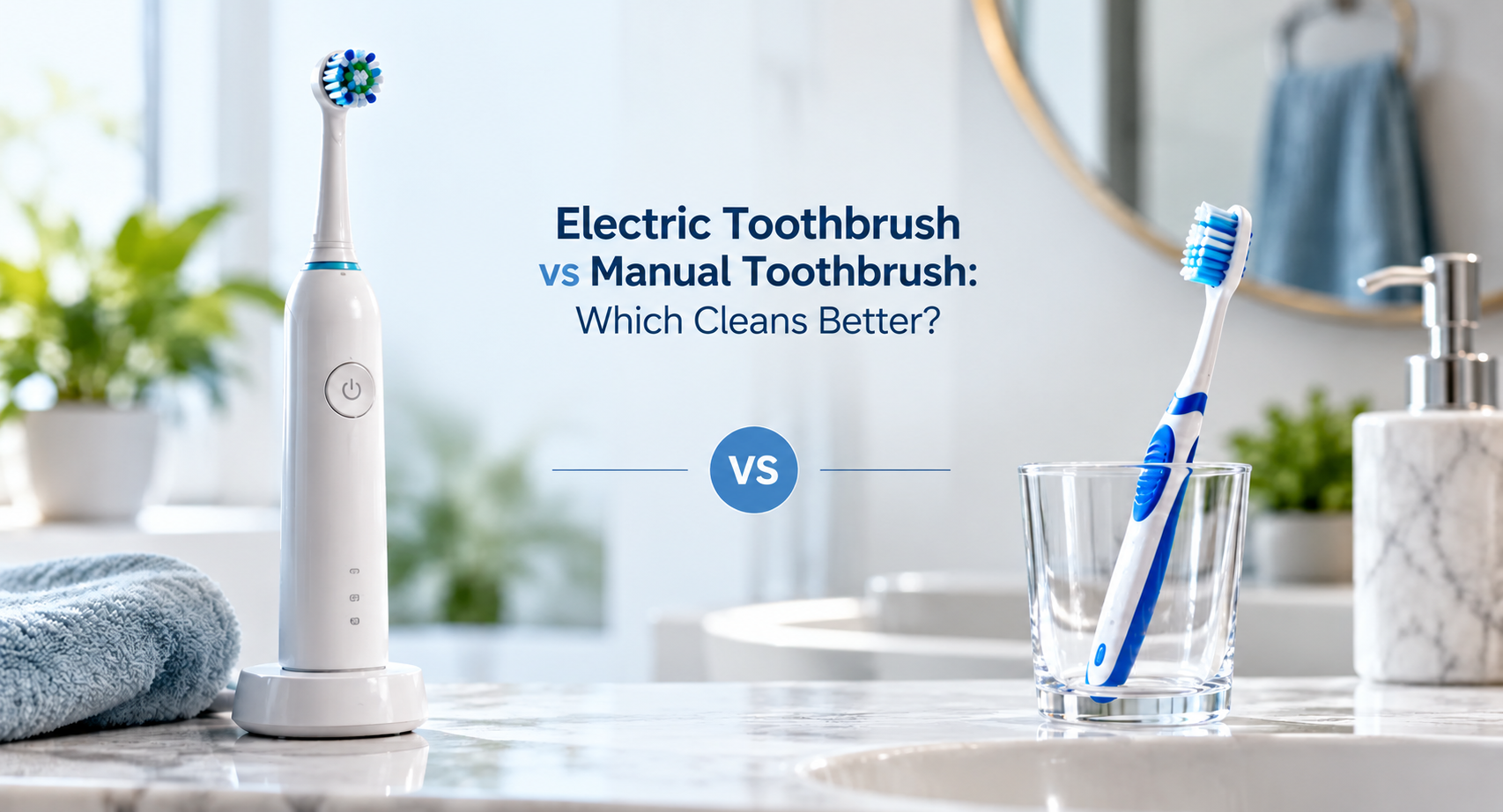

Someone at our front desk hears this question at least three times a week: “Wait, am I supposed to be using an electric toothbrush?” It usually comes right after a birthday gift from a relative, or after watching one too many toothbrush commercials promising a “dentist-level clean” in bold letters. Stand in front of any pharmacy shelf today, and you will find rows of attractive electric toothbrushes right next to the humble manual toothbrush that has done the job faithfully for over a century.
So, which one deserves a place in your bathroom? Stop searching electric toothbrush vs manual toothbrush on Google at 11 pm. Here’s the answer from a team that has looked inside thousands of mouths across Lincolnwood.
Why This Debate Even Matters
Oral hygiene is not just about fresh breath. According to the CDC’s national surveillance data, nearly 47% of American adults aged 30 and above show signs of periodontal (gum) disease, and that number climbs even higher after age 65. Gum disease doesn’t happen overnight; it builds up slowly through plaque that isn’t removed effectively during brushing. So, what you use to brush, and more importantly, how you use it becomes important in your long-term oral health.
It’s Not Really About the Brush. It’s About the Clock
In 2025, the International Journal of Dental Hygiene published a systematic review that looked specifically at how brushing time affects plaque removal with both manual and powered brushes.
Plaque isn’t just leftover food; it’s a living film of bacteria that starts rebuilding itself on your teeth within hours of your last brushing. When left undisturbed, it hardens into tartar, which no toothbrush (electric or manual) can remove. Only a professional cleaning can. While brushing, you mechanically break that bacterial film before it has a chance to harden and irritate your gums. So, it is the technique and time that matter: a brush with more moving parts can help, but it can’t compensate for a thirty-second rinse-and-run.
According to findings pulled straight from the peer-reviewed study on PubMed Central: with a manual toothbrush, one minute of brushing removes about 27% of plaque. In comparison, a full two minutes removes around 41%.
However, a separate review tracking real-world brushing habits found that people using electric toothbrushes tend to brush for a little over two minutes on average, while manual-brush users typically stop around the ninety-second mark, often without realizing it. So, before we even get to understand the bristles, the truth to remember is that most of us underbrush, regardless of which toothbrush is in our hand.
How a Manual Toothbrush Cleans Your Teeth
With a manual toothbrush, you rely entirely on your hand movement, pressure, and technique to physically dislodge plaque and food debris from your teeth and gumline. It is affordable, travel-friendly, widely available, and doesn’t need charging or batteries.
But brushing too hard, too fast, or in the wrong direction can leave plaque behind or even wear down enamel and irritate gums over time.
Manual Toothbrush: Pros and Cons
Pros: Budget-friendly and available absolutely everywhere; no charging, no batteries, no maintenance makes it ideal for travel; gives you full manual control over pressure and angle
Cons: Results depend on technique, consistency, and duration; easier to brush too hard, which can cause gum recession and enamel wear; no built-in reminders for brushing time
How an Electric Toothbrush Works
An electric toothbrush does the hard work for you. Depending on the type, the brush head oscillates, rotates, vibrates, or pulses at high speed, anywhere from a few thousand to tens of thousands of movements per minute. Human hands cannot replicate these tiny, rapid motions, which disrupts more plaque in the same amount of time.
Electric Toothbrush: Pros and Cons
Pros: Superior plaque and gingivitis reduction over time; more thorough cleaning for children, seniors, and people with limited dexterity; built-in timers, pressure sensors, and quadrant alerts
Cons: Higher upfront cost, plus recurring expense of replacement brush heads; needs charging or batteries; bulkier to carry and slightly noisier than a manual brush.
Electric vs Manual Toothbrush: What Does the Research Actually Say?
Once you ignore the marketing, the clinical picture is fairly consistent. According to the American Dental Association, both manual and powered toothbrushes are effective at removing plaque when used properly.
According to a Cochrane Collaboration review that pooled 56 clinical trials involving more than 5,000 participants comparing regular toothbrush vs electric toothbrush plaque removal:
- Powered toothbrushes with a rotation-oscillation motion reduced plaque by 11% within the first one to three months
- After three months of consistent use, the reduction climbed to 21%
- Gum inflammation (gingivitis) also came down by 6% early on, and 11% by the three-month mark.
So, while both types of toothbrushes are effective at removing plaque when used correctly, electric brushes may offer an edge for people who struggle with brushing technique, dexterity, or consistency. If your technique is already solid, you brush for the full two minutes without needing a reminder, and you prefer controlling every stroke yourself, there’s no clinical reason to switch. ADA’s Seal of Acceptance is awarded to both manual and electric brushes that meet the same safety and efficacy standards.
Are Electric Toothbrushes Better for Everyone?
Not necessarily, but certain groups do see a benefit, such as:
- Children who are still learning proper brushing technique often do better with an electric brush’s timer and gentle vibration. Our kids’ dentistry team frequently recommends them for younger patients once they are old enough to handle one safely.
- Older adults with arthritis, patients recovering from dental procedures, and anyone with braces or implants also tend to find electric brushes far easier and more effective to use consistently.
- Heavy-handed brushers who tend to scrub too hard; pressure sensors catch this before it damages enamel or gum tissue.
How to Choose the Best Electric Toothbrush for You
Often companies try to manipulate buyers with most of the extras such as Bluetooth tracking, UV sanitizing cases, five brushing modes, etc. Such features are nice-to-haves, not need-to-haves. Here’s what you should actually care about:
- Look for the ADA Seal of Acceptance on the packaging. It confirms independent testing for safety and plaque-removal efficacy.
- Choose a soft-bristle brush head, regardless of the brush type, to protect enamel and gum tissue. Medium and Firm do more harm.
- Prioritize a built-in two-minute timer and pressure sensor, since this is the one feature with the clearest research behind it.
- If you have braces, implants, or sensitive gums, ask your dentist which brush head design suits your specific needs.
- Replace the brush head (or manual toothbrush) every three to four months, or sooner if bristles fray.
Lincolnwood Family Dental Take
An electric toothbrush, particularly one with a rotation-oscillation or sonic action, helps in plaque and gingivitis reduction over a manual toothbrush. But a manual toothbrush used correctly at a 45-degree angle to the gumline with gentle circular motions, twice a day, for a full two minutes, is still miles ahead of an expensive electric brush used carelessly for thirty seconds.
Pair this with fluoride toothpaste and routine visits for general dentistry check-ups, professional cleanings, and regular preventive dental care at Lincolnwood Family Dental to catch early warning signs long before they become expensive, painful problems. Schedule your appointment today and let us help you build a smile-care routine that actually works.
Frequently Asked Questions
If I already have gum disease, will switching to electric help?
It can support treatment, but it isn’t a cure on its own. If you already have gingivitis or early periodontal disease, an electric toothbrush’s consistent motion may help slow further plaque buildup. But you’ll still need a professional diagnosis and cleaning to address existing damage.
Are electric toothbrushes rougher on sensitive teeth and gums?
Not when used correctly. In fact, many electric models include pressure sensors specifically designed to prevent the over-brushing that causes sensitivity and gum recession in the first place. Just make sure the brush head is soft-bristled, regardless of type.
Do I need an expensive electric toothbrush, or will a basic one do?
Any basic model with a two-minute timer and the ADA Seal of Acceptance delivers the core clinical benefits. Premium features like app connectivity or multiple brushing modes are convenient, but they haven’t been shown to meaningfully improve plaque removal on their own.
I already have great brushing technique. Should I still switch?
Not necessarily. If you consistently brush for two full minutes with correct technique, a manual toothbrush will serve you just as well. Electric brushes show clinical benefits in people whose technique or consistency has room to improve.
How do I know which toothbrush is actually right for me?
Honestly, this is easier to answer in person than online. Bring it up at your next cleaning, and our team can look at your gum health, any dental work you have, and your brushing habits before making a recommendation. Explore more oral health tips on our dental blog, or browse all our services to see how we support every stage of your family’s oral health.