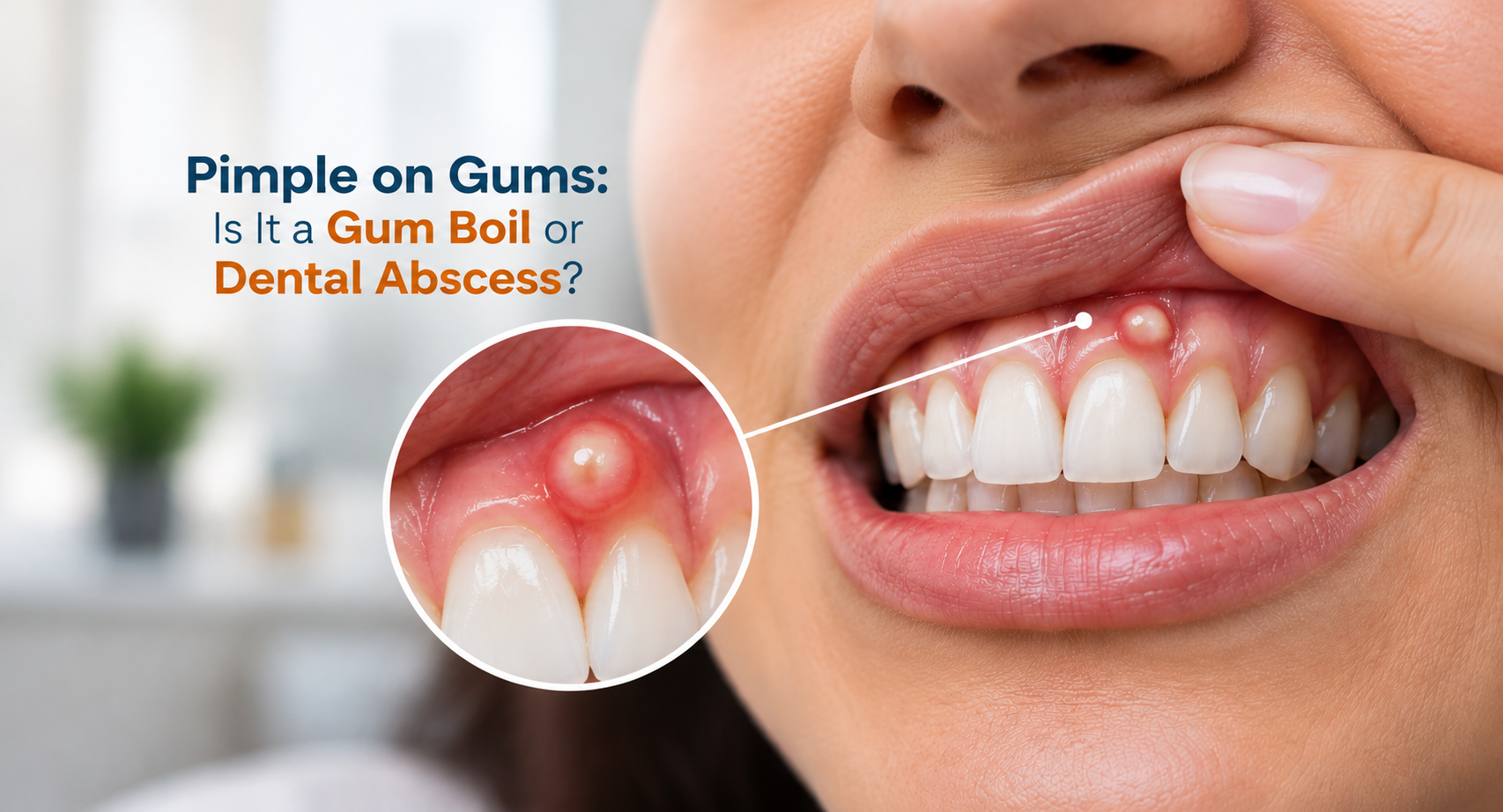

A pimple on gums is often a small raised spot that may be red, swollen, or filled with pus. While minor irritation can cause some gum bumps, a recurring bump or gum boil may indicate an infection that needs dental treatment.
A gum abscess can develop in the gum tissue or around an infected tooth and may cause a painful bump on gums, swelling, or a bad taste when pus drains. When an infection comes from inside a tooth, it may appear as a dental abscess on gum. Knowing the difference between a gum boil vs abscess can help you recognize when a bump needs professional attention.
Key Takeaways
- A pimple on gums can result from irritation, plaque buildup, gum infection, or an infection coming from a tooth.
- A gum boil may be a drainage point for an underlying dental infection, even if the bump is not painful.
- A gum abscess can cause swelling, pus, tenderness, tooth pain, or a painful bump on gums.
- A dental abscess on gum may temporarily drain and shrink without resolving the infection underneath.
- Do not squeeze or pop a gum boil, as this does not treat the underlying cause.
- A dentist can determine whether the bump is a gum boil, gum abscess, or another condition and recommend treatment based on its cause.
What Is a Pimple on the Gums?
A pimple on gums can appear as a small red, white, or yellow spot and may or may not cause discomfort. Some are linked to simple irritation, while others develop when bacteria cause an infection beneath the surface.
A gum boil is often associated with an infection that drains through the gum. You may notice a small amount of pus or an unpleasant taste if it opens. A gum abscess can cause more noticeable swelling, tenderness, or pain, particularly when the infection involves a tooth or deeper gum tissue.
What Causes a Pimple on the Gums?
A pimple on gums is often caused by an infection in a tooth or the surrounding gum tissue. Other causes include trapped food, plaque buildup, or physical irritation from food or dental appliances.
Common causes include:
- Tooth infection: Deep decay, cracks, or tooth damage can allow bacteria to reach the pulp. The infection may spread toward the root and drain through the gum, causing a gum boil.
- Gum infection: Bacteria can infect the tissue around a tooth and form a gum abscess, particularly when plaque buildup or gum disease is present.
- Trapped food or plaque: Food particles and plaque caught along or beneath the gumline can irritate the tissue and allow bacteria to multiply.
- Physical irritation: Braces, dentures, sharp foods, or accidental injury can irritate the gums and cause temporary swelling.
- Other oral conditions: Cysts and other tissue changes can sometimes look similar to an infection and need a dental examination for proper diagnosis.
If the area persists, drains pus, or keeps returning, a dentist should examine it to identify the underlying cause.
Gum Boil vs Abscess: What Is the Difference?
The main difference between a gum boil and a gum abscess is that a boil is often the visible drainage point, while an abscess is the infection and collection of pus beneath the tissue. A small spot on the gum can therefore be a sign of a deeper dental problem.
| Feature | Gum Boil | Gum Abscess |
| Location | Appears on the gum surface | Can form in the gum or around the root of a tooth |
| Appearance | Small raised spot that may contain or release pus | Swelling that may be red, tender, or filled with pus |
| Discomfort | Can be painless or mildly sore | More likely to cause pain or tenderness |
| Drainage | May drain on its own | May remain contained or drain through the gum |
| Underlying problem | Often signals an infection that has found an outlet | Represents an infection that requires treatment |
When an infection inside a tooth spreads into the surrounding tissue, it can create a dental abscess on gum that eventually drains through the surface. Once this happens, the area may look less swollen, but the source of the infection can remain.
That is why identifying the difference between a gum boil vs abscess based on appearance alone is difficult. A dental examination is the safest way to determine the cause of abscess on gums or gum boil.
How Do You Know If a Pimple on the Gums Is a Dental Abscess?
A dentist needs to examine a pimple on gums to determine whether it is caused by an infection. The location and look of the spot can provide clues, but they cannot confirm whether it is a gum abscess, gum boil, or dental abscess on gum.
During an examination, your dentist may:
- Check the nearby tooth: Decay, cracks, damage, or tenderness can suggest that the infection started inside the tooth.
- Examine the gums: The dentist may look for deeper gum pockets or areas of inflammation around the affected tooth.
- Check for drainage: Pus or fluid coming from a gum boil can indicate that an infection has found a way to drain.
- Take dental X-rays: An X-ray can help identify infection around the tooth root or changes that are not visible on the gum surface.
If the spot keeps returning or drains and then comes back, it may be connected to an untreated source of infection. Getting it examined can help determine whether the problem needs treatment and what type of treatment is appropriate.
How Is a Gum Abscess Treated?
Treatment for a gum abscess depends on where the infection started and how far it has spread. The dentist may need to drain the infection, treat the affected tooth, or address an underlying gum problem. Here’s how you can treat it:
Drainage of the Abscess
If pus has collected in the gum tissue, the dentist may drain the abscess to release it. This can reduce pressure and remove infected material, but drainage alone may not resolve the source of the infection.
Root Canal Treatment
If the infection has started inside the tooth, root canal treatment may be needed. The infected pulp is taken out, the root canals are cleansed and sealed, and the tooth is restored to prevent further infection.
Tooth Extraction
If a tooth is majorly damaged or cannot be saved, the dentist may suggest an extraction. Removing the affected tooth eliminates the source of infection and may be followed by a replacement option when appropriate.
Gum Treatment
When the infection is related to gum disease, treatment may focus on removing plaque and tartar from below the gumline. Methods like scaling and root planing can clean deeper gum pockets and help control the infection. Deep cleaning may be recommended depending on the condition of the gums.
Antibiotics
Antibiotics may be prescribed when an infection has spread or when there are signs that it is affecting areas beyond the immediate tooth or gum tissue. They do not replace treatment of the underlying dental problem.
Can You Pop a Gum Boil or Pimple on Your Gums?
No, you should not pop a gum boil or squeeze a pimple on gums yourself. Breaking the area open may release some fluid, but it does not treat the infection that caused it.
Trying to pop it can also:
- Irritate or damage the surrounding gum tissue
- Introduce more bacteria into the area
- Spread infection to nearby tissues
- Make it harder for a dentist to identify the source
A gum boil may drain on its own and appear smaller afterward. However, this does not necessarily mean the underlying infection has gone away. Avoid squeezing or puncturing the area and have it examined by a dentist. If you have significant swelling, severe pain, or other urgent symptoms, emergency dental care may be appropriate.
How Can You Prevent Gum Boils and Gum Abscesses?
Good oral hygiene and normal dental care can lower the risk of infections that lead to a gum boil or gum abscess. Prevention focuses on keeping plaque under control and treating dental problems before they become more serious.
- Brush twice a day: Make sure to clean your teeth and gumline with fluoride toothpaste to remove plaque and food debris.
- Floss daily: Cleaning between the teeth helps remove buildup that a toothbrush cannot reach.
- Attend regular dental checkups: Routine examinations can help identify cavities, gum disease, and other problems early. Regular preventive dentistry can help you maintain your oral health.
- Treat dental problems promptly: Untreated decay, cracks, and gum disease can grow the risk of infection.
- Avoid tobacco products: Tobacco use can affect gum health and make it harder for the gums to heal.
- Protect your teeth: Wear a mouthguard when in contact sports. It can help prevent injuries that may damage teeth or surrounding tissues.
If you notice a recurring pimple on gums, do not rely on home care alone. A dental examination can determine whether an underlying problem needs treatment.
Pimple on Gums: When to Get It Checked?
A pimple on gums may clear up on its own when caused by minor irritation, but a persistent or recurring bump should be checked by a dentist. Seek an evaluation if you notice:
- A gum boil that does not disappear or repeatedly returns
- Pus or fluid coming from the gums
- Swelling around a tooth or along the gumline
- A painful bump on gums or increasing discomfort
- Tooth sensitivity or pain alongside the affected area
A lack of pain does not always mean there is no underlying problem. Some dental infections can drain through the gums and temporarily reduce pressure without resolving the source. A dental exam can help find whether the problem involves the tooth or gum tissue.
At Lincolnwood Family Dental, the team can assess the area and recommend treatment based on the cause. If you are concerned about a dental abscess on gum, book an appointment online or call 847-610-9272.
FAQs
Can a gum boil go away on its own?
A gum boil may shrink or drain without treatment, but this does not necessarily mean the underlying infection has cleared. If it persists or returns, a dentist should identify and treat the cause.
Can a gum abscess spread to other parts of the body?
Yes. An untreated gum abscess can spread into nearby tissues and, in more serious cases, cause a broader infection. Seek prompt dental care if swelling is increasing or spreading.
Is a pimple on gums always an infection?
No. A pimple on gums can also result from irritation, trapped food, or other oral conditions. A persistent or recurring bump should be examined to determine the cause.
Can a gum abscess cause a bad taste in your mouth?
Yes. If an abscess drains into the mouth, you may notice an unpleasant or bitter taste from the released fluid or pus. This should still be evaluated because drainage does not necessarily resolve the infection.
How long does a gum abscess take to heal?
The healing time depends on the cause and treatment. A gum abscess generally needs dental treatment to address the source of the infection rather than simply waiting for the swelling to disappear.