

Kids should go to the dentist when the first tooth appears, and no later than their first birthday. The American Academy of Pediatric Dentistry (AAPD) sets that as the rule, and the first visit starts a routine of checkups every six months.
In this guide, you will learn what happens at each age, how to prepare a nervous child, and how to pick the right dentist. Our kids’ dentistry team at Lincolnwood Family Dental sees children from their first tooth through their teens. To understand the cleanings behind those visits, see our preventive dentistry page.
When Do Kids Start Going to the Dentist?
Kids start going to the dentist by age one. The AAPD advises that your child should see a dentist when the first tooth appears, or no later than the first birthday.
That early start matters because decay can begin as soon as teeth do. According to the CDC’s 2024 Oral Health Surveillance Report, about 11 percent of children aged 2 to 5 already have one or more baby teeth with untreated decay. An early visit catches problems before they hurt.
The first tooth usually appears around 6 months. Once it does, the clock starts on the first-birthday deadline.
What Age Do Kids Start Going to the Dentist? An Age-by-Age Guide
Each stage has its own focus. Use this table to see what the dentist watches for and what you do at home.
| Age | At Home | At the Dentist |
| 0 to 6 months | Wipe gums with a clean, damp cloth | No visit yet |
| First tooth to age 1 | Brush with a tiny smear of fluoride toothpaste | First visit |
| Ages 1 to 3 | Brush twice a day; help your child | Checkup every 6 months |
| Ages 3 to 6 | Use a pea-sized amount of fluoride; teach spitting | Sealants, habit review |
| Ages 6 to 12 | Supervise brushing and flossing | Sealants on new molars |
| Teens | Encourage independence | Wisdom teeth and bite checks |
Birth to the First Tooth
Before teeth arrive, wipe your baby’s gums with a clean, damp cloth after feeding. This clears the sugars that bacteria feed on.
First Tooth to Age One
Brush twice a day with a tiny smear of fluoride toothpaste as soon as a tooth shows. Book the first dental visit now, so the dentist can check growth and coach you on care.
Ages One to Three
Visits move to every six months. Most children have their full set of 20 baby teeth by age three. You still brush your child’s teeth, since they cannot clean well on their own yet.
Ages Three to Six
Switch to a pea-sized amount of fluoride toothpaste, and teach your child to spit it out. This is when the dentist may suggest sealants and review thumb or pacifier habits. The AAPD notes that most children drop these habits on their own, but one that lasts past age three may need a mouth appliance.
Ages Six to Twelve
The first permanent molars come in around age six. Our post on dental sealants for kids explains why these new molars are worth protecting.
The Teen Years
Teens take over their own brushing and flossing. The dentist watches for wisdom teeth, bite issues, and the habits that come with braces or sports.
When to Take Kids to the Dentist Between Checkups
Six-month checkups are the baseline, but some signs call for an earlier visit. Book an appointment if you notice any of these.
- White or brown spots: Early decay can show as a mark on a tooth.
- Pain or sensitivity: A child who avoids chewing on one side may have a cavity.
- Swollen or bleeding gums: These can signal infection or injury.
- A knocked-out or chipped tooth: Treat this as a same-day dental emergency.
- Bad breath that lasts: Persistent odor can point to decay or trapped food.
What Happens at the First Dental Visit
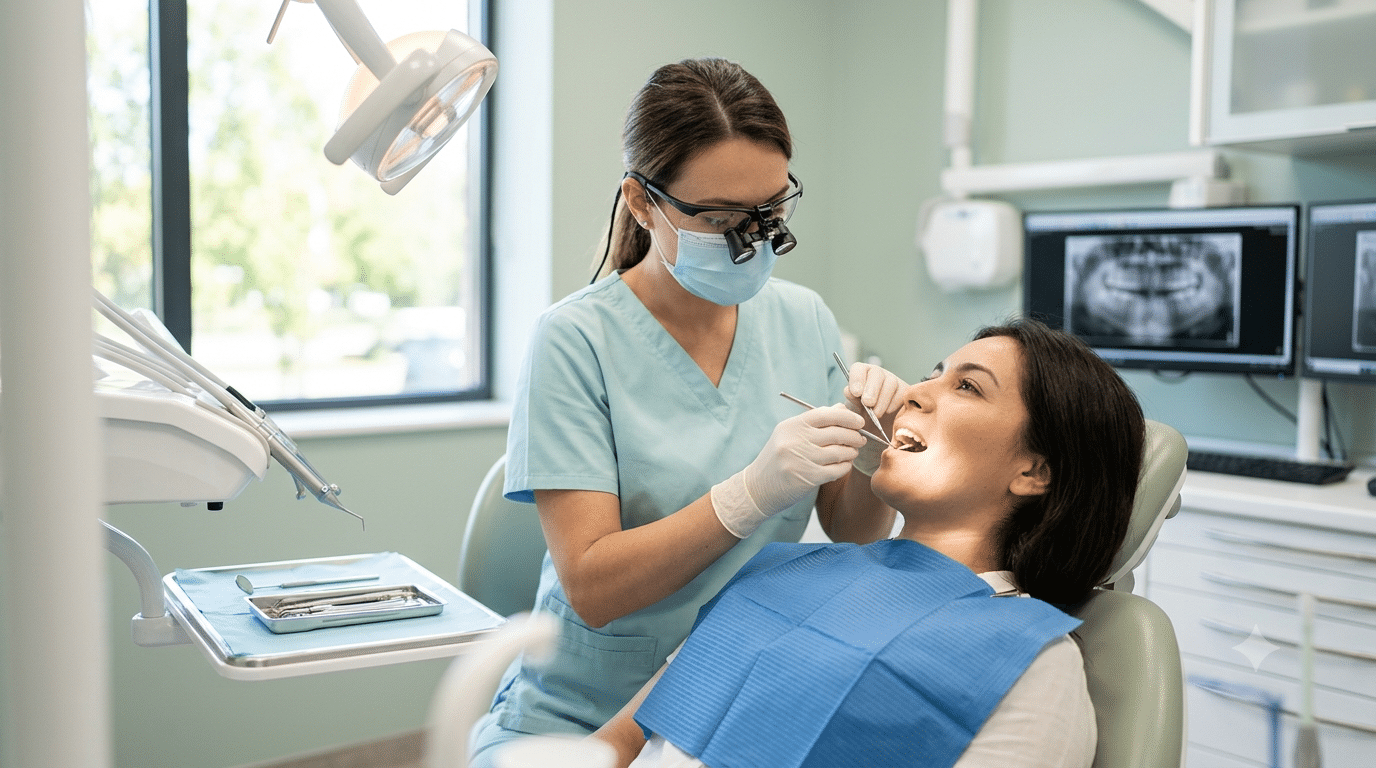
The first visit is short and gentle. Nationwide Children’s Hospital says it usually runs 30 to 45 minutes, and it is as much about comfort as treatment.
- The dentist examines the teeth, gums, jaw, and bite.
- They gently clean the teeth and remove soft plaque.
- They show you how to brush and floss for your child’s age.
- They answer your questions about teething, diet, and habits.
Bring your child’s medical history and mention any triggers, such as distress when apart from you. Dentists usually avoid X-rays in young children unless they are truly needed. The goal is a positive first experience that your child will not dread repeating.
How to Make Dentist Visits Less Scary for Kids
A calm child starts with a calm parent. Children read your mood, so your own ease sets the tone for the whole visit. These steps help.
Step 1: Book a morning slot. A rested child copes better than a tired one.
Step 2: Keep your words simple and upbeat. Explain that the dentist counts and cleans their teeth.
Step 3: Leave your own fears at home. Do not share stories about painful visits you have had.
Step 4: Ask for a meet-the-team visit first. At our office, Dr. Sana Baig invites children in to meet the staff before any treatment, so the room feels familiar.
Step 5: Praise your child afterward. A small reward links the visit to a good feeling.
For older kids with real dental fear, our guide on how to overcome dental anxiety has more techniques.
How to Choose the Best Dentist for Kids
The best dentist for kids is one your child feels safe with, and you can reach easily. Use this checklist when you compare offices.
- Experience with children: Ask whether the team treats kids every day.
- A welcoming space: Calm colors and friendly staff make a first visit easier.
- A preview option: A meet-the-team visit before treatment lowers fear.
- Clear pricing: Look for written plans and help checking insurance.
- Convenient care: One office for the whole family saves trips.
Our February children’s dental health post shows how we make care fun for young patients, and our back-to-school dental tips guide helps you plan exams around the school year.
How Lincolnwood Family Dental Cares for Kids
We welcome children from their first tooth through their teenage years. Dr. Sana Baig leads kids care, and she recommends a get-to-know-us visit before any treatment, so your child is comfortable first.
Our services cover cleanings, fluoride treatments, sealants, state-required school exams, and brushing and flossing instruction. We give you a written treatment plan before we start, and our staff helps verify your insurance. We offer payment plans for families without coverage. You can book online or call 847-610-9272.
Conclusion
The rule is simple. Take your child to the dentist by their first birthday or first tooth, then keep a six-month routine. Early visits build habits that protect both baby and adult teeth, and they turn the dentist into a familiar place instead of a scary one.
Is it time for your child’s first visit? Book a kids’ appointment, and we will make the first one easy.
FAQs
Do baby teeth with cavities need to be treated if they fall out anyway?
Yes, baby teeth hold space for adult teeth and help your child chew and speak. An untreated cavity can cause pain and infection, and it can damage the adult tooth forming underneath. Losing a baby tooth too early can crowd the teeth that follow.
What if my child’s first tooth comes in late?
Still plan the first visit by the first birthday, even if no tooth has appeared. The dentist checks gum and jaw development and guides your home care. Late teething is common and usually not a concern on its own.
How often should my child see the dentist after the first visit?
The AAPD recommends a checkup every six months for most children. Your dentist may suggest a different schedule if your child is prone to cavities. Regular visits catch small problems before they grow.
Can thumb sucking or a pacifier affect my child’s teeth?
Most children stop these habits on their own without harm. The AAPD says that if thumb or finger sucking continues past age three, the dentist may recommend a mouth appliance. Mention the habit at your child’s checkup.
What should I do if my child chips a tooth or gets a toothache?
Call the dentist the same day for a chip, a knocked-out tooth, or ongoing pain. Rinse the mouth with warm water and use a cold compress on the cheek while you wait. If you can, save any broken tooth piece in milk.