

A deep cleaning for gum disease, called scaling and root planing, removes plaque and tartar from below the gumline. A dentist recommends it when gum pockets measure 4 mm or deeper. It usually takes two visits under local anesthesia, and it treats gum disease before it reaches the bone.
In this guide, you will learn how the procedure works, how long it takes, whether it hurts, and its side effects. For the basics of the treatment, see our overview of what a deep cleaning involves. To check your own symptoms first, read the signs and stages of gum disease.
Deep Cleaning vs Regular Cleaning: The Core Difference
A regular cleaning polishes the tooth surface above the gumline. A deep cleaning reaches the roots below it, where a routine cleaning cannot go.
According to the American Dental Association, scaling and root planing is a deep cleaning below the gumline used to treat gum disease. Early gum disease that has not damaged the structures below the gumline may need only a professional cleaning.
| Feature | Regular Cleaning | Deep Cleaning |
| Area treated | Above the gumline | Above and below the gumline |
| Purpose | Prevent gum disease | Treat active gum disease |
| Pocket depth | 1 to 3 mm | 4 mm or deeper |
| Anesthesia | None | Local anesthetic |
| Visits | One | Often two |
Our post on the difference between a regular and a deep cleaning compares the two in more detail.
What Is a Deep Cleaning at the Dentist?
Scaling and root planing has two parts. Scaling removes plaque and hardened tartar from the tooth and root surface, above and below the gum. Root planing then smooths the root so the gum can reattach to the tooth and bacteria have less to cling to.
The goal is to shrink the pocket between the gum and the tooth. A shallower pocket is easier to keep clean at home, which slows the disease.
Deep Cleaning Teeth Procedure, Step by Step
A periodontal deep cleaning follows the same order at most practices. Here is what each visit covers.
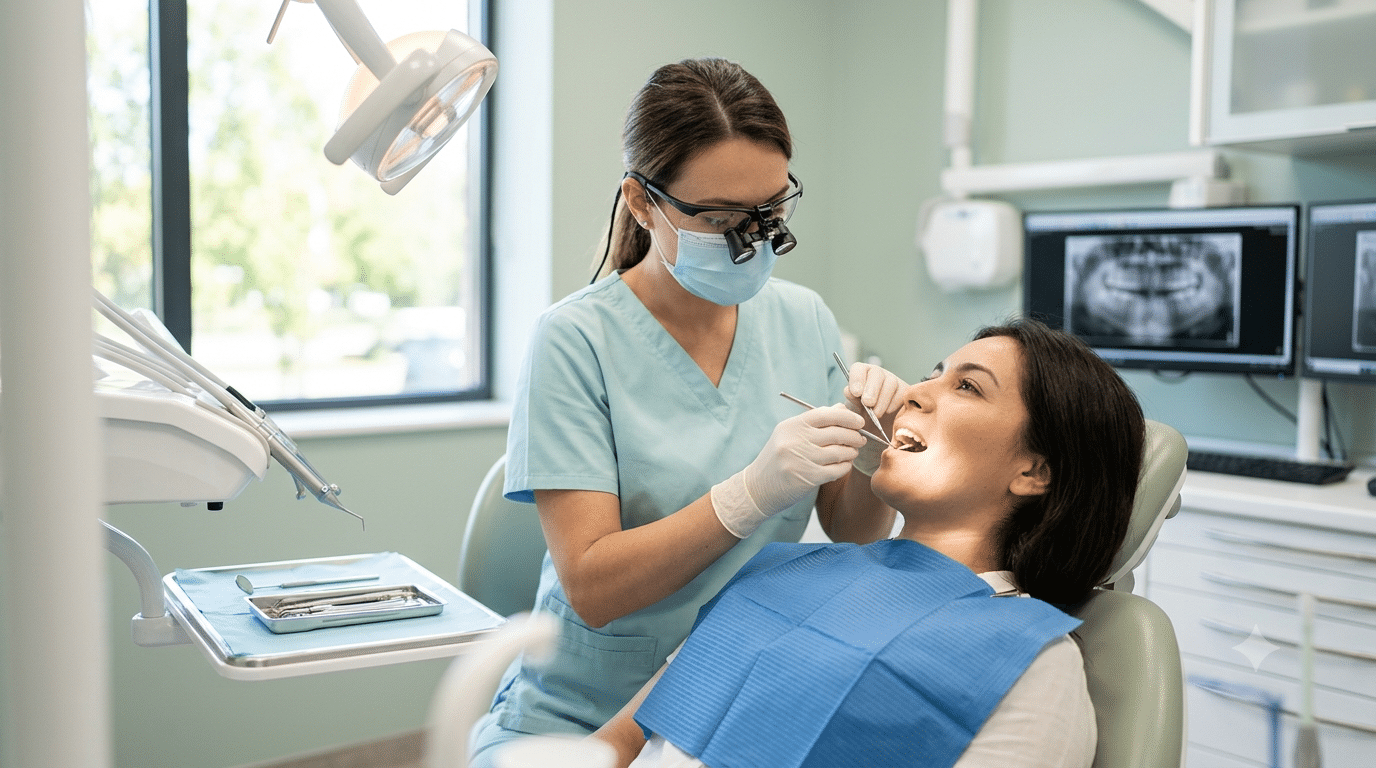
Step 1: Measure the pockets. Your dentist uses a small probe to record the depth around each tooth, often with X-rays.
Step 2: Numb the area. The dentist gives a local anesthetic so you don’t feel the scaling.
Step 3: Scale the teeth. Hand instruments and an ultrasonic scaler remove tartar above and below the gumline.
Step 4: Plane the roots. The dentist smooths the root surface to help the gum heal against the tooth.
Step 5: Apply an antimicrobial. For moderate to severe cases, the dentist may place a rinse, gel, or antibiotic into the pocket.
Step 6: Schedule a recheck. The ADA notes that your dentist measures the pockets again at a later visit to see how the gums have healed.
How Long Does a Deep Cleaning Take at the Dentist?
A deep cleaning usually takes two visits. Each appointment treats one side of the mouth, which keeps the numbness and the chair time manageable.
Severe cases may be split into four visits, one per quadrant. Your dentist decides the split based on how much tartar is present and how deep the pockets are. A recheck visit follows a few weeks later.
Is Deep Cleaning Teeth Painful?
The cleaning itself is not painful because the area is numb. Afterward, the ADA says you may have pain for a day or two and tooth sensitivity for up to a week.
An over-the-counter pain reliever handles most of the soreness. Tell your dentist if you have had jaw or anesthetic problems before, so they can plan for your comfort.
Deep Dental Cleaning Side Effects
Most side effects are mild and fade within days. The ADA lists the common ones.
- Sore gums: Tenderness for a day or two after the visit.
- Sensitivity: Reaction to hot or cold for up to a week.
- Swelling and bleeding: Gums may be puffy and bleed lightly at first.
- Gum recession: As swelling goes down, gums may sit lower and expose more root.
- Rare infection: Uncommon, and mostly a risk for people with weakened immunity.
Some patients with heart valve conditions need preventive antibiotics before the procedure. Share your full medical history during the assessment.
Is Deep Root Cleaning Necessary?
Yes, when pockets reach 4 mm or deeper, a deep cleaning is necessary to stop the disease. Left alone, deep pockets trap bacteria that destroy the bone holding your teeth. That leads to loose teeth and tooth loss.
A deep cleaning also lowers the bacteria linked to problems beyond the mouth. Skipping it does not make the disease pause. It lets the infection work below the gum, where brushing cannot reach.
If you have been turned away for a routine cleaning, our post on why a dentist may deny a regular cleaning explains when a deep cleaning is required first.
Benefits of a Deep Dental Cleaning
The main benefit is a shallower, healthier pocket that you can keep clean. Scaling and root planing also reduces bleeding and freshens breath by removing the bacteria behind it.
For moderate to severe cases, dentists sometimes add a local antibiotic to the pocket. A 2025 systematic review in Frontiers in Dental Medicine pooled data from 43 studies with more than 5,000 patients. It found that adding a tetracycline-class antibiotic to scaling and root planing reduced pocket depth by about 0.5 mm more at 6 to 9 months than cleaning alone. The authors call the extra gain modest and note most trials had a high risk of bias.
Aftercare Checklist
Good aftercare protects the result. Follow these steps for the first week.
- Brush twice a day gently with a soft brush.
- Use any prescribed rinse exactly as directed.
- Eat soft foods and skip very hot or spicy items for a few days.
- Take pain relief as needed, following the label.
- Keep your recheck appointment so the dentist can measure healing.
If bad breath or bleeding persists after healing, call us. Our guide to bleeding gums explains what is normal and what is not.
Deep Cleaning Cost and Insurance
Cost depends on how many quadrants need treatment and where you live. Many dental plans cover all or part of a deep cleaning once they diagnose gum disease, because it treats a medical condition rather than a cosmetic one.
Typical United States ranges run from $150 to $350 per quadrant without insurance, or roughly $600 to $1,400 for the full mouth. Insurance often brings that down. Ask your office for a written estimate and a benefits check before you start.
How Lincolnwood Family Dental Approaches Deep Cleaning
A deep cleaning starts with a diagnosis, not a guess. We measure your pockets, review your history, and take digital X-rays. Our CT Orthophos SL adds a 3D view when a standard X-ray isn’t enough.
Our periodontist, Dr. Saad Khizar Usmani, leads gum treatment here, so planning and care happen in one place. An adult exam costs $89, or $19 if you are in pain, and we check your insurance benefits before treatment.
Patients with a history of periodontitis return for maintenance cleanings every 3 to 4 months.
Conclusion
A deep cleaning for gum disease treats what a regular cleaning cannot reach. It numbs the area, clears tartar below the gum, and smooths the roots so your gums can heal. The sooner you treat deep pockets, the more teeth and bone you keep.
Think your gums need more than a polish? Book a gum health exam, and we will measure your pockets and explain your options.
FAQs
Can I eat normally after a deep cleaning?
Wait until the numbness wears off before eating, usually a couple of hours. Choose soft foods for the first day or two and avoid very hot or spicy items. Chew on the untreated side if one side is still tender.
Will my gums grow back after a deep cleaning?
Gums do not regrow lost tissue, but they do tighten and reattach to the smoothed root. As swelling drops, gums may look slightly lower and expose more root. That is healing, not further loss.
How is a deep cleaning different from gum surgery?
A deep cleaning is a non-surgical treatment done with a probe and scaler under local anesthetic. Gum surgery lifts the gum to reach deeper pockets and is considered only when a deep cleaning does not fully resolve the disease.
Do I always need antibiotics with scaling and root planing?
No, most deep cleanings work without them. A dentist adds a local antibiotic only for moderate to severe pockets, and the extra benefit is modest. Antibiotics support the cleaning rather than replace it.
Can gum disease come back after a deep cleaning?
Yes, if plaque builds up again below the gumline. Daily brushing, flossing, and maintenance visits every 3 to 4 months keep the pockets from deepening again. Your dentist tracks this by re-measuring your pockets.