
Why are my teeth sensitive all of a sudden, and is it serious? Most often, enamel has worn thin or your gums have pulled back. That exposes dentin, the softer layer underneath, which reacts to cold, heat, and sugar.
Sometimes the cause is simple, like a new whitening toothpaste or nighttime clenching. Other times it points to a cracked tooth, a deep cavity, or an infection. This guide helps you sort the harmless causes from the urgent ones.
Our overview of tooth sensitivity covers the basics, while this article covers sudden cases.
Why Are My Teeth Sensitive? What Happens Inside the Tooth
What causes sensitive teeth is almost always some form of exposed dentin. Tooth sensitivity, also called dentin hypersensitivity, is short, sharp pain from that exposed layer. Dentin is the layer that sits under your enamel and below the gum line.
It contains tiny tubes that lead straight to the nerve, according to Cleveland Clinic. Cold air, hot coffee, or sweets move fluid in those tubes, and the nerve fires. That movement is the sharp zing you feel in your tooth.
A 2025 clinical review found rates from 1.3 percent to 92.1 percent. The average across studies was about 33 percent, or roughly one in three people.
Enamel wear is a common trigger, but it is not the same as decay. Our post on tooth erosion vs tooth decay explains how to tell them apart.
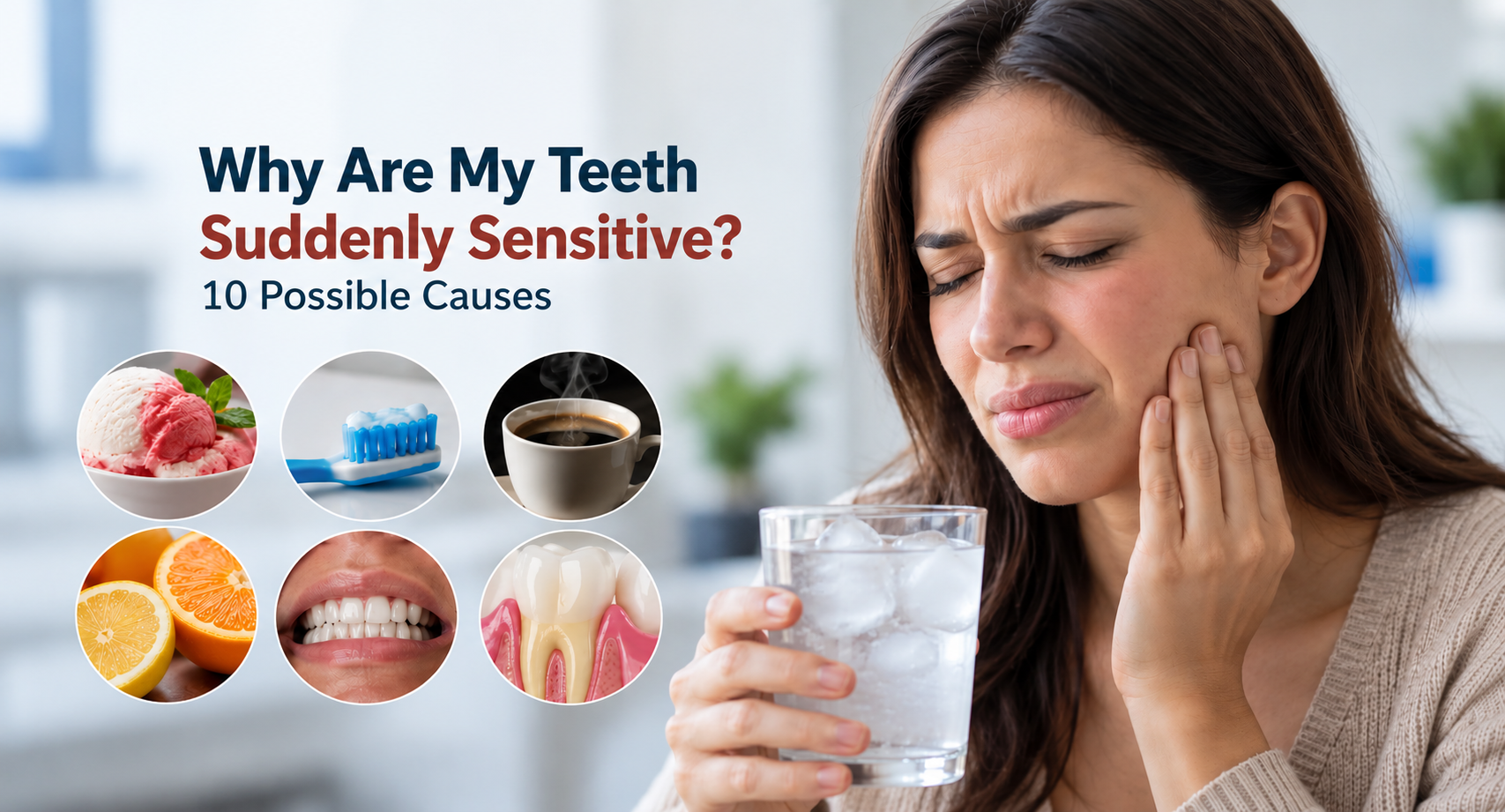
Why Are My Teeth Suddenly Sensitive? 10 Possible Causes
Sudden tooth sensitivity usually traces back to one of these ten causes. Some fade on their own, while others need a dentist to treat them.
1. Worn Enamel
Acidic food, soda, and hard brushing slowly thin the enamel that shields your dentin. Once enamel is gone, your body cannot grow it back on its own.
2. Gum Recession
Receding gums expose the root surface, which has no enamel coating at all. Aggressive brushing and gum disease are the usual causes, and roots feel everything.
3. Teeth Grinding
Clenching at night wears enamel flat and can leave your jaw sore by morning. Many people do not know they grind until a dentist points out the wear.
4. Tooth Decay
A cavity breaks through enamel and lets bacteria near the nerve. Pain with sweets is often the first sign, and it grows if you wait.
5. A Cracked Tooth
A crack can open and close as you chew, which makes pain come and go. Biting pain that releases when you let go is a classic sign.
6. Acid Reflux
Stomach acid reaching your mouth dissolves enamel, especially on the backs of teeth. Frequent heartburn or a sour taste in the morning is worth mentioning.
7. Sinus Pressure
Upper back teeth sit close to the sinuses, so congestion can mimic a toothache. If several upper teeth ache during a cold, sinus pressure is a likely culprit.
8. Teeth Whitening
Peroxide gels pass through enamel and can irritate the nerve for a day or two. We cover whitening sensitivity in more detail further down this page.
9. Recent Dental Work
A new filling or crown can leave the tooth tender for a few weeks. Learn when a dental filling is needed and what to expect afterward. Sensitivity that gets worse after a week should be rechecked.
10. Nerve Inflammation
Deep decay or trauma can inflame the pulp, the nerve tissue inside your tooth. Lingering pain after cold is a warning sign that needs prompt care.
Sensitive teeth causes often overlap, so use this table to narrow yours down.
| What You Notice | Likely Cause | Best Next Step |
| Zing with cold or sweets | Worn enamel or receding gums | Desensitizing toothpaste and a soft brush |
| Sore jaw on waking | Grinding | Exam and possible night guard |
| Pain when you release a bite | Cracked tooth | See a dentist this week |
| Tender after bleaching | Whitening gel | Pause treatment and wait 2 days |
| Pain after a filling | Bite or nerve irritation | Recheck in 1 to 2 weeks |
| Throbbing or swelling | Infection | Call the same day |
Why Do My Teeth Hurt When I Drink Cold Water?
Teeth sensitive to cold are reacting through exposed dentin and its nerve tubes. How long the pain lasts tells you how serious it is.
Try this simple 30 second test the next time it happens. Pain that fades within 30 seconds usually means exposed dentin. Pain that lingers past 30 seconds suggests the nerve is inflamed.
Say a sip of iced water stings for two seconds and then stops. That pattern fits exposed dentin, and a desensitizing toothpaste often helps.
Our list of signs you need a root canal shows what to watch for.
Front Teeth Suddenly Sensitive: What Could Be Different
Front teeth have thinner enamel than molars, so they react faster to wear and whitening. Look for thin, translucent edges, a yellow tint, or a rough spot with your tongue.
A yellow tint means enamel is thinning and dentin shows through. Whitening strips, night grinding, and a hairline chip can each trigger front tooth pain. See a dentist promptly if only one front tooth hurts. Avoid whitening products on that tooth until a dentist has checked it.
Tooth Sensitivity After Whitening: How Long Does It Last?
Tooth sensitivity after whitening usually fades within a day or two of stopping. Call us if it lasts beyond a few days or becomes a constant ache.
A 2026 umbrella review of 24 systematic reviews compared whitening gel strengths. Moderate strength gels whitened about as well as stronger ones, with less sensitivity. Gels containing potassium nitrate or sodium fluoride also reduced sensitivity.
Pause whitening, use a fluoride or potassium nitrate toothpaste, and avoid very cold drinks. Our post on professional whitening for sensitive teeth explains safer options.
Sensitive Teeth Treatment: What Actually Helps
Most sensitive teeth treatment starts at home and takes a few weeks to work. Try these four steps first, in this order, for at least a month:
- Switch to a soft brush and use gentle, small circles.
- Brush twice daily with a desensitizing toothpaste.
- Spit after brushing instead of rinsing, so fluoride stays on your teeth.
- Wait 30 minutes after acidic food or drinks before you brush.
Give the toothpaste several weeks before you decide it is not working. Our comparison of the best toothpaste for sensitivity and gum health can help you choose.
If home care is not enough, we offer stronger options in the office:
- Fluoride varnish to strengthen enamel and calm exposed dentin
- A sealant or bonding over exposed root surfaces
- A gum graft when recession keeps exposing the root
- A night guard if grinding is wearing your teeth
When the nerve is inflamed, Johns Hopkins Medicine notes a root canal may be needed.
Why Are My Teeth Sensitive for Weeks? When to See a Dentist
Sensitivity that lasts more than two weeks deserves an exam, even if it is mild. Book sooner if you notice any of these warning signs:
- Pain that lingers longer than 30 seconds after hot or cold
- Sharp pain when you bite down and release
- Swelling in your gums, face, or jaw
- A bad taste, pus, or a pimple on the gum
Bring notes on what triggers the pain and how long it lasts. Those details help us find the cause faster at your visit.
Swelling or fever needs same day care, as our guide to tooth abscess symptoms explains.
How Lincolnwood Family Dental Finds the Cause
We start with a full exam, a bite check, and a gum check. We then use our CT Orthophos SL imaging to check roots, bone, and nearby structures.
Dr. Ameena Haroon, our endodontist, treats nerve problems right here in our office. Dr. Saad Khizar Usmani, our periodontist, handles gum recession and gum grafts. Same day CEREC crowns mean a cracked tooth can often be restored in one visit.
An adult exam costs $89, or $19 if you are in pain. Patients have left more than 700 five star reviews for our team. We were also ranked first in Lincolnwood as of August 2025.
Frequently Asked Questions
Can sensitive teeth heal on their own?
Mild sensitivity from whitening or a brief gum irritation often settles within days. Worn enamel and receded gums do not grow back, so they need ongoing care. Desensitizing toothpaste and fluoride can still keep the pain under control.
Can mouthwash make teeth sensitive?
Some mouthwashes are acidic, and daily use can slowly wear enamel. Look for an alcohol free fluoride rinse if your teeth react to it.
Can jaw problems cause tooth sensitivity?
Jaw joint disorders, also called TMD, can cause aching in several teeth at once. Muscle tension from clenching often drives it, so a night guard may help.
Does tooth sensitivity get worse with age?
It can because gums recede and enamel wears down over the years. Gentle brushing habits and regular checkups help slow that process down.
Can whitening toothpaste cause sensitivity?
Whitening toothpastes often contain mild abrasives or chemical agents that irritate some people. Switch to a gentle desensitizing formula for a few weeks and see if it improves.
If your teeth are sensitive, book an exam and we will find the cause.