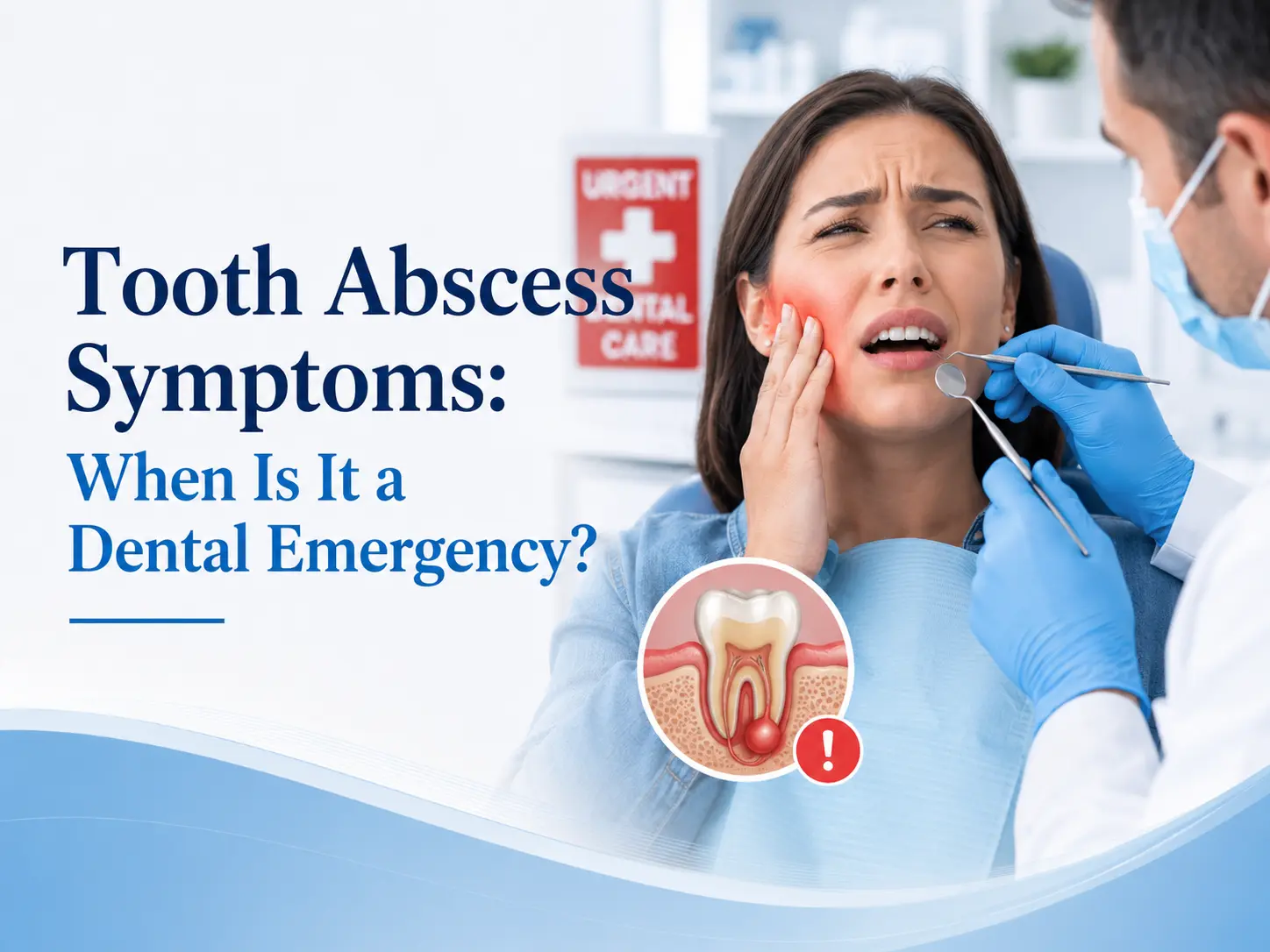

A tooth abscess is a pocket of pus caused by a bacterial infection in or around a tooth. Common tooth abscess symptoms include a severe, throbbing toothache, sensitivity to hot and cold, facial or gum swelling, a bad taste, and fever. It becomes a dental emergency when swelling spreads to your eye, neck, or floor of the mouth, or when you have fever, chills, or trouble breathing or swallowing. Seek care the same day.
According to the CDC’s 2024 Oral Health Surveillance Report, nearly 21% of adults aged 20 to 64 in the United States had one or more permanent teeth with untreated decay (2024). Untreated decay is the leading pathway to a dental abscess, which is why recognizing the early signs matters.
Table of Contents
ToggleWhat is an Abscess Tooth?
An abscess tooth is a tooth with a pocket of pus caused by a bacterial infection. The infection forms when bacteria reach the inner pulp or the tissue around the root, and your body walls off the bacteria with pus. That pocket builds pressure, which is why an abscess usually hurts.
Dentists classify most cases into two types. A periapical abscess forms at the tip of the tooth root, typically after decay or trauma lets bacteria into the pulp. A periodontal abscess forms in the gum and bone beside the tooth, usually tied to gum disease. The distinction matters because it changes the treatment. Consistent preventive dentistry visits catch decay before it reaches this stage.
What are the Symptoms of an Abscessed Tooth?
The most common symptom of an abscessed tooth is a severe, constant, throbbing toothache. The pain can radiate to your jaw, ear, or neck on the same side. Other signs of a tooth abscess include:
- Sharp pain or discomfort with hot and cold food or drink
- Pain when biting or chewing
- Swelling in your face, cheek, or gums
- Tender, swollen lymph nodes under your jaw or in your neck
- A sudden rush of foul-tasting, salty fluid in your mouth if the abscess bursts and drains
- Bad breath that does not clear with brushing
- Fever
Pain that suddenly stops is not a sign the problem is gone. It often means the abscess has ruptured and drained, which relieves pressure but leaves the infection active.
What does an Abscess Tooth Look Like?
An abscess tooth often looks like a red, swollen area of gum, sometimes with a raised pimple-like bump near the base of the tooth. That bump is a draining point called a sinus tract, and pressing it may release pus. The tooth itself may appear darker or discolored than the surrounding teeth, and the surrounding gum may look shiny or puffy.
In more advanced cases, swelling extends to the cheek or jaw and is visible externally. If you can see facial swelling in the mirror, treat it as urgent rather than waiting.
What Causes a Dental Abscess?
A dental abscess is caused by bacteria entering the tooth or surrounding gum tissue. The most common causes are:
- Untreated tooth decay that reaches the inner pulp, the single most frequent cause.
- A cracked or chipped tooth that gives bacteria a path inside.
- Gum disease (periodontitis), which creates deep pockets where bacteria collect.
- A failed or old dental procedure that allows reinfection.
Risk rises with poor oral hygiene, a high-sugar diet, dry mouth, and conditions that weaken the immune system. The American Dental Association’s oral health resources outline how daily brushing, flossing, and routine checkups interrupt this chain before an abscess forms.
Can a Dental Abscess Heal Itself?
No. A dental abscess cannot heal on its own. The infection has a source inside the tooth or gum, and that source does not resolve without treatment. Even when an abscess ruptures and the pain eases, the bacteria remain, and the infection can spread to the jaw, sinuses, or bloodstream.
Antibiotics alone also do not cure an abscess. As the Cleveland Clinic notes, antibiotics can slow the spread of infection but will not prevent it from returning, and the tooth itself still needs treatment. This is the most common and most dangerous misconception about abscesses. If you already notice warning signs of a root canal infection, the tooth needs professional evaluation, not a wait-and-see approach.
When is a Tooth Abscess a Dental Emergency?
A tooth abscess becomes a dental emergency when the infection spreads beyond the tooth. Call a dentist the same day, or go to an emergency room, if you have any of the following:
- Difficulty breathing, swallowing, or opening your mouth
- Swelling that spreads to your eye, neck, or the floor of your mouth
- A fever of 100.4°F (38°C) or higher, especially with chills
- Rapidly worsening facial swelling
- A racing heartbeat or confusion alongside the above
These are signs the infection may be reaching areas that affect your airway or bloodstream. As the Mayo Clinic explains, an untreated abscess can spread to the jaw and other areas of the head and neck, and in rare cases lead to sepsis, a life-threatening emergency. Difficulty breathing or swallowing warrants an immediate emergency room visit rather than waiting for a dental appointment.
Even without these red flags, an abscess with steady pain and swelling still needs prompt professional care. Lincolnwood Family Dental accommodates emergency dental appointments for situations like this, so patients in pain are seen quickly rather than left waiting.
What is the Treatment for Dental Abscesses?
Treatment for dental abscesses focuses on draining the pus and removing the source of infection. Based on how far the infection has spread, a dentist may:
- Drain the abscess through a small incision to release the pus and relieve pressure.
- Perform root canal therapy to remove infected pulp and save the tooth.
- Extract the tooth when it cannot be saved, sometimes with a bone graft to protect the jaw.
- Prescribe antibiotics as a support to these procedures, never as a standalone cure.
Which option fits your case depends on the tooth, the type of abscess, and how early you are seen. When a treated tooth needs a protective crown afterward, Lincolnwood Family Dental’s CEREC system can produce a same-day crown in a single visit, so most patients avoid a second appointment. You can review the full service list or book an appointment online to have an active abscess assessed.
Gum Abscess vs Tooth Abscess: What’s the Difference?
The difference between a gum abscess and a tooth abscess is where the infection starts. A tooth abscess (periapical) begins inside the tooth, usually from decay or a crack that reaches the pulp, and centers on the root tip. A gum abscess (periodontal) begins in the gum tissue beside the tooth, usually from gum disease and trapped bacteria in a deep pocket.
Feature | Tooth abscess (periapical) | Gum abscess (periodontal) |
Origin | Inside the tooth pulp/root tip | Gum and bone beside the tooth |
Common cause | Decay, crack, trauma | Gum disease, trapped debris |
Tooth condition | Often decayed or damaged | Tooth may be healthy |
Typical treatment | Root canal or extraction | Deep cleaning, drainage |
Both cause pain and swelling, and both need professional care, but the treatment path differs, which is why an accurate diagnosis matters.
Frequently Asked Questions
How long can a tooth abscess go untreated?
Not long safely. An abscess can worsen within days, and there is no reliable window in which it is safe to wait. Because the infection can spread to the jaw, sinuses, or bloodstream, you should be seen as soon as symptoms appear rather than counting on a grace period.
Will a tooth abscess show up on an X-ray?
Usually, yes. A periapical abscess often appears as a dark area at the root tip on a dental X-ray. Some early or gum-based abscesses are harder to see, so a dentist combines the X-ray with an exam and symptoms to confirm the diagnosis.
Can I pop a tooth abscess myself?
No. Squeezing or lancing an abscess at home can push bacteria deeper and spread the infection. Safely draining an abscess requires a dentist and sterile technique. Rinse with warm salt water for temporary relief and get professional care.
Does a tooth abscess always cause pain?
Not always. Some abscesses, especially those with an open drainage point, cause little or no pain even while the infection continues. Absence of pain does not mean the abscess has healed, so any swelling, bump, or bad taste still needs evaluation.
Can a tooth abscess come back after treatment?
Yes, if the underlying tooth is not fully treated or if a root canal fails over time. Completing the recommended procedure, keeping up daily oral hygiene, and attending follow-up visits are what prevent recurrence.