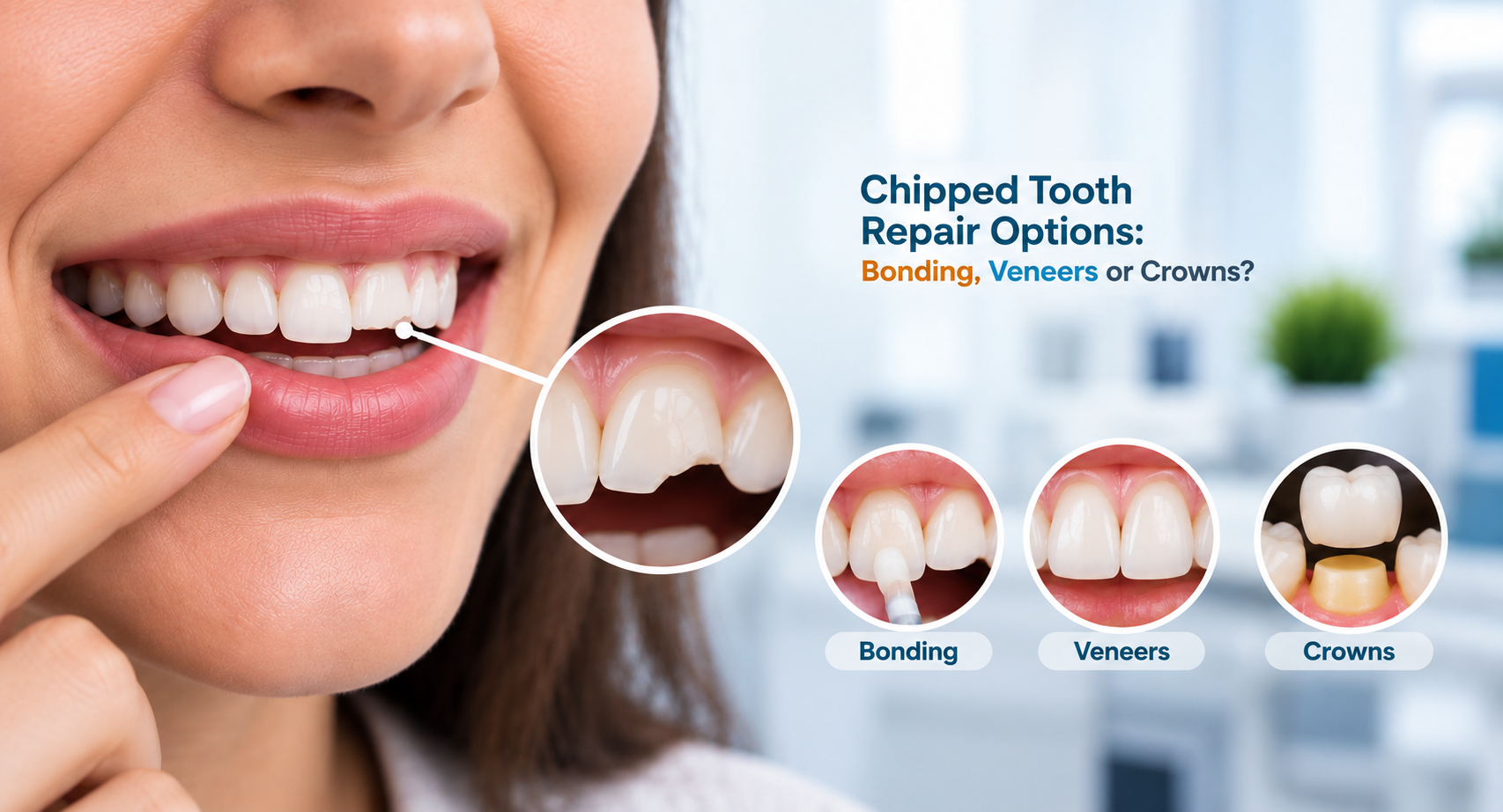

How to fix a chipped tooth depends on how much tooth is missing and where the damage sits. A small chip on a front tooth is usually repaired with dental bonding in a single visit. A larger or more visible chip may call for a porcelain veneer. When a piece of tooth chipped off is big enough to weaken the structure, a crown caps and protects the entire tooth. Your dentist matches the chipped tooth repair to the damage, so the fix lasts and looks natural.
Key Takeaways
- Dental bonding is the quickest, most affordable chipped tooth repair and works best for small chips on any tooth.
- Porcelain veneers cover the entire front surface and suit moderate chips, especially when cosmetic results matter most.
- Crowns cap the whole tooth and are the right choice when a large piece of tooth chipped off or the tooth is structurally weakened.
- A 2025 systematic review found that 17% to 50% of adolescents and adults experience dental trauma, with crown fractures being the most common type.
- Left untreated, a chip can expose the dentin or pulp to bacteria and lead to infection.
- Same-day CEREC crowns eliminate the wait between appointments by milling a permanent crown in one visit.
What Causes a Tooth to Chip?
A tooth is chipping when force exceeds what the enamel can handle. Enamel is the hardest tissue in the body, but it has limits. Cleveland Clinic explains that dental trauma and biting something hard are both common causes of a chipped tooth, and lists falls, sports injuries, car accidents, and using teeth as tools (opening packages, cracking ice) among the triggers.
A 2025 peer-reviewed systematic review published in Dentistry Journal found that an estimated 17% to 50% of adolescents and adults experience dental trauma, with uncomplicated crown fractures being the most frequent type. That means chips and breaks are not rare events; they are one of the most common reasons people visit a dentist.
Repeated chipping has its own set of causes. If my teeth are chipping more than once, the usual suspects are teeth grinding (bruxism), weakened enamel from acid erosion or decay, large old fillings that undermine the tooth, and bite misalignment that concentrates force on certain teeth. Addressing the underlying cause matters as much as the chipped tooth repair itself, because a fix on a grinding habit left unchecked will chip again.
Three Main Chipped Tooth Repair Options
Each chipped tooth treatment matches a different level of damage. Here is how they compare.
| Feature | Bonding | Veneer | Crown |
| Best for | Small chips, minor reshaping | Moderate front-tooth chips, cosmetic upgrade | Large chips, structural weakness |
| Material | Composite resin (tooth-colored) | Porcelain or ceramic | Porcelain, zirconia, ceramic, or metal |
| Visits | 1 (done chairside) | Usually 2 (prep + placement) | 2 (or 1 with CEREC) |
| Typical lifespan | 3 to 10 years | 10 to 20 years | 5 to 15+ years |
| Tooth reduction | Minimal to none | Thin layer from front surface | More reduction all around |
Bonding: Best for Small Chips
Dental bonding is the simplest, fastest, and most affordable way to fix a chipped tooth. Your dentist roughens the surface, applies a tooth-colored composite resin, shapes it to match the tooth, and hardens it with a curing light. The entire chipped tooth treatment takes 30 minutes to an hour per tooth and usually requires no anesthesia.
Bonding works well for small chips, minor edge repairs, and closing small gaps. The ADA describes bonding as a procedure where tooth-colored resin is applied and hardened with a special light to restore or improve a smile. Because the resin is softer than porcelain, bonding can stain over time and is more likely to chip again under heavy force. It is best suited for low-stress areas and smaller repairs.
At Lincolnwood Family Dental, cosmetic bonding is handled in a single visit by Dr. Sana Baig, who matches the resin shade to your natural tooth color.
Veneers: Best for Visible Front-Tooth Chips
When a chip is larger, more visible, or part of a broader cosmetic concern, a porcelain veneer covers the entire front surface of the tooth. A veneer is a thin shell, custom-made from porcelain or ceramic, bonded permanently over the prepared tooth.
Veneers suit moderate front-tooth chips, teeth with uneven edges, and situations where you want to correct color, shape, or minor alignment at the same time. The dentist removes a thin layer of enamel from the front of the tooth, takes an impression, and sends it to a lab. The finished veneer is bonded at a second appointment. Porcelain veneers resist staining better than bonding and typically last 10 to 20 years.
For a front tooth where a piece of tooth chipped off and appearance matters, porcelain veneers are often the strongest cosmetic answer. They do require irreversible enamel removal, so the decision is permanent.
Crowns: Best for Large Chips and Structural Damage
When the chip is large enough that the remaining tooth is weakened, a crown is the right chipped tooth repair. A crown is a custom-made cap that covers the entire tooth, restoring its shape, strength, and appearance.
Crowns suit large fractures, teeth with existing large fillings, and teeth where the chip reaches close to the nerve. They are made from porcelain, zirconia, ceramic, or metal alloys, and they last 5 to 15 years or longer. The traditional process takes two visits: one to prepare the tooth and fit a temporary crown, and a second to bond the permanent one.
At Lincolnwood Family Dental, the in-house CEREC system skips that wait. It scans the tooth digitally, designs the crown on screen, and mills it from a ceramic block in the same appointment. A same-day CEREC crown means one visit, one round of numbing, and no temporary.
What to do When a Piece of Tooth Chipped off
If a piece of tooth chipped off, take a few immediate steps before you see your dentist. Rinse your mouth with warm water to clean the area. If there is bleeding, press gauze against it for 10 to 15 minutes. Save the fragment in milk or saliva, since your dentist can sometimes reattach it. Cover any sharp edge with dental wax or sugar-free gum to protect your tongue and cheek. For more detail on home first-aid steps, this guide on quick fixes for a broken tooth covers the full process.
A chip that does not hurt can still be a problem. Cleveland Clinic notes that severe chips exposing the tissue beneath the enamel require dental work, and even painless chips can let bacteria reach the dentin or pulp over time.
How Your Dentist Chooses the Right Chipped Tooth Treatment
Your dentist considers four things when deciding how to fix a chipped tooth: the size of the chip, its location, the condition of the rest of the tooth, and your goals. Knowing how to fix a chipped tooth the right way starts with that assessment.
A small chip on a back molar that you cannot see may only need smoothing or bonding. A moderate chip on a front tooth that shows when you smile usually calls for bonding or a veneer, depending on how much enamel is missing. A large fracture that compromises the tooth’s structure or reaches the nerve needs a crown, and if the nerve is damaged, a root canal may come first.
A general dentistry exam with X-rays shows how deep the damage runs and which option fits. If my teeth are chipping repeatedly, your dentist will also look for grinding, bite issues, or enamel erosion as the underlying driver. Lincolnwood Family Dental, a women-led practice ranked number one in Lincolnwood for August 2025 with more than 700 five-star reviews, handles all three repairs in-house. You can book online or call 847-610-9272.
Frequently Asked Questions
Can a chipped tooth heal on its own?
No. Tooth enamel cannot regenerate. A chip that is left untreated stays chipped and can worsen as bacteria enter the exposed surface. Even a small, painless chip should be checked so your dentist can decide whether it needs repair or monitoring.
How much does chipped tooth repair cost?
It depends on the method. Bonding is the most affordable, typically a few hundred dollars per tooth. Veneers and crowns cost more because they involve lab work and stronger materials. Your insurance, the tooth’s location, and the extent of damage all affect the final number.
Is a chipped tooth a dental emergency?
A small cosmetic chip is not an emergency, but you should still see a dentist soon. A chip with pain, bleeding, or visible inner tissue needs prompt care. If the chip is large and the tooth feels unstable, treat it as urgent and call your dentist the same day.
Why are my teeth chipping for no obvious reason?
If my teeth are chipping without a clear impact, the cause is usually grinding, acid erosion, weakened enamel, or old fillings that have undermined the tooth. A dental exam can identify the pattern and address the root cause so the chipping stops.
How long does dental bonding last on a chipped tooth?
Bonding typically lasts 3 to 10 years, depending on the chip’s location, your bite, and your habits. Avoiding hard foods and not using your teeth as tools helps it last longer. When bonding wears out, your dentist can reapply or upgrade to a veneer or crown.
This article is for general information and is not a substitute for professional dental advice. If you chip a tooth, see a dentist for an evaluation and the right repair.