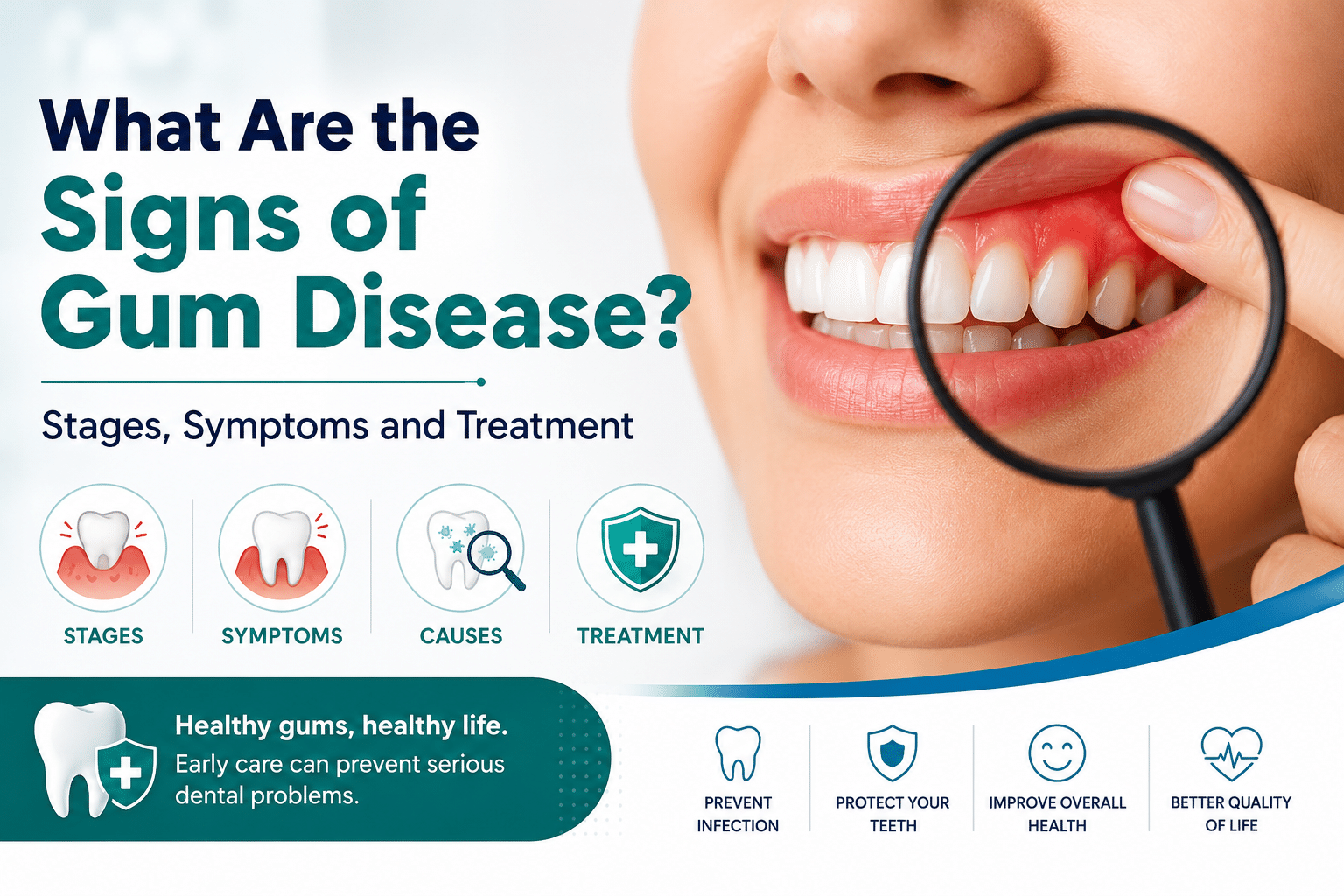

Gum disease is an infection of the tissues that hold your teeth in place. The earliest signs of gum disease are gums that bleed when you brush or floss, look red or swollen, and feel tender. At this stage, called gingivitis, the damage is reversible with professional cleaning and better home care. Left untreated, it advances to periodontitis, where the bone supporting your teeth breaks down, pockets form, and teeth can loosen and fall out.
The numbers make the scale clear. A peer-reviewed analysis of NHANES data found that 46% of U.S. adults aged 30 and older, representing 64.7 million people, had periodontitis, with 8.9% having the severe form. That means nearly one in two adults over 30 already has gum disease beyond the reversible stage.
Key Takeaways
- Gum disease starts as gingivitis (reversible gum inflammation) and can progress through four stages of periodontitis (irreversible bone loss).
- The earliest gum infection symptoms are bleeding gums, redness, swelling, and persistent bad breath.
- Nearly half of U.S. adults 30 and older have some form of periodontitis.
- Gingivitis is fully reversible with professional cleaning and daily brushing and flossing; periodontitis is not reversible but can be managed and stabilized.
- Gum disease treatment ranges from scaling and root planing (deep cleaning) for early to moderate stages to surgery for advanced bone loss.
- Smoking, diabetes, and genetics are the strongest risk factors, and gum disease has been linked to heart disease, diabetes complications, and adverse pregnancy outcomes.
What is Gum Disease?
Gum disease is a bacterial infection that progresses from the gums into the bone. The NIDCR defines it as an infection of the tissues that hold teeth in place, caused by plaque that builds up and hardens when brushing and flossing are inadequate.
The CDC explains that gingivitis involves gum inflammation and is reversible, while periodontitis involves bone loss and is irreversible, though it can be slowed and managed.
A critical detail that separates gum disease from most dental problems: a StatPearls review notes that periodontitis is generally painless, with pain occurring only during acute flare-ups. As a result, gum disease often goes unnoticed until it reaches an advanced stage, which is why knowing the signs of gum disease matters more than waiting for pain.
Signs of Gum Disease and Gum Infection Symptoms
The signs of gum disease change as the condition advances. Here are the gum infection symptoms to watch for, listed roughly from earliest to most severe.
- Gums that bleed when brushing or flossing. Healthy gums do not bleed from gentle brushing. Bleeding is the most common early sign and the easiest to dismiss.
- Red, swollen, or puffy gums. Healthy gum tissue is firm and pale pink. Redness and puffiness indicate a gum infection is active.
- Persistent bad breath or a bad taste. Bacteria trapped in plaque and pockets release sulfur compounds. Bad breath that does not clear with brushing points to a bacterial load below the gumline.
- Tender gums or pain when chewing. Tenderness develops as inflammation deepens from the gum surface into the supporting structures.
- Gums pulling away from your teeth (recession). When tissue detaches, it exposes root surfaces and creates pockets where bacteria collect.
- Teeth that look longer than before. This is recession viewed from outside. The tooth has not grown; the gum has retreated.
- Loose or shifting teeth. Bone loss weakens the foundation, and teeth begin to drift or feel mobile.
- A change in your bite. When teeth shift, the way your upper and lower teeth meet changes, which you may notice when chewing.
- Pus between the gums and teeth. Pus is a sign the gum infection has formed an abscess and needs prompt treatment.
Stages of Gum Disease
The stages of gum disease follow a clear progression from reversible inflammation to irreversible bone loss. The 2017 classification by the American Academy of Periodontology uses a staging system based on measurable clinical findings.
The staging system also includes a grading component (A, B, or C) that estimates how quickly the disease is progressing and whether risk factors such as smoking or uncontrolled diabetes are accelerating it.
| Stage | Name | What is happening | Is it reversible? |
| Pre-stage | Gingivitis | Gum inflammation only; no bone loss | Yes, fully reversible |
| Stage I | Early periodontitis | Mild attachment loss (1-2 mm); early bone changes on X-ray | No, but highly manageable |
| Stage II | Moderate periodontitis | Attachment loss of 3-4 mm; bone loss in upper third of root | No, but progression can be slowed |
| Stage III | Severe periodontitis | Attachment loss of 5+ mm; bone loss to mid-root; up to 4 teeth at risk | No; may need surgery |
| Stage IV | Advanced periodontitis | Extensive bone loss; 5+ teeth at risk; bite collapse possible | No; complex treatment required |
Is Gum Disease Reversible?
Gingivitis is fully reversible. Cleveland Clinic states that people with gingivitis can often reverse it with professional dental cleanings and improved home oral hygiene. Once bone loss begins (Stage I and beyond), the disease crosses into periodontitis, which is not reversible.
Lost bone does not regrow on its own. Treatment at that point aims to halt progression, reduce pocket depth, and stabilize the teeth that remain.
So is gum disease reversible as a whole? Only at the gingivitis stage. The further it advances, the more treatment is needed to manage it, which is why catching the signs of gum disease early changes the outcome.
How to Get Rid of Gum Disease: Treatment by Stage
How to get rid of gum disease depends on how far it has progressed. Each stage of gum disease calls for a different level of gum disease treatment.
Gingivitis: A professional cleaning (prophylaxis) removes plaque and tartar. When paired with daily brushing and flossing, this is usually enough to completely reverse the inflammation.
Stage I and II (early to moderate periodontitis): The standard gum disease treatment is scaling and root planing, a deep cleaning that removes tartar and bacteria from below the gumline and smooths the root surfaces so gums can reattach. Antibiotics, placed locally or taken orally, may be added to control the bacterial load.
Stage III and IV (severe to advanced periodontitis): When pockets are too deep for scaling alone, surgical options include flap surgery (lifting the gum to clean the root and bone), bone grafts, and guided tissue regeneration. These severe gum problems require a periodontist.
At Lincolnwood Family Dental, a women-led practice ranked number one in Lincolnwood for August 2025 with more than 700 five-star reviews, gum care from routine preventive cleanings to deep cleanings and advanced periodontal treatment is handled in-house, including by Dr. Saad Khizar Usmani, the practice’s on-staff periodontist.
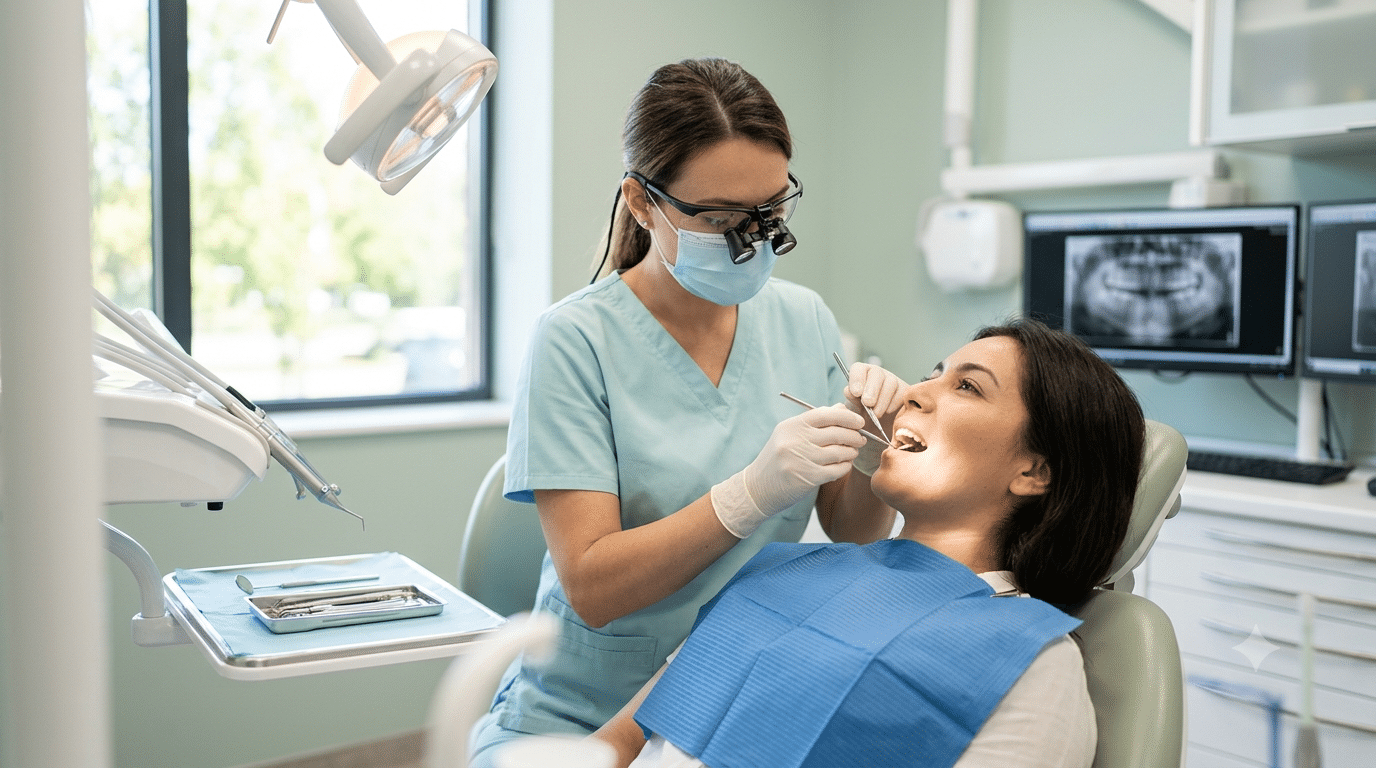
Having a gum specialist on-site means no referral to a separate office for severe gum problems. A general dentistry exam with probing measurements and X-rays is where the staging starts, and you can book online or call 847-610-9272.
Risk Factors That Accelerate Gum Disease
Some people develop gum disease faster than others, even with similar brushing habits. The strongest risk factors backed by research:
- Smoking. The CDC data showed that 64.2% of current smokers had periodontitis, compared with 40.8% of non-Hispanic whites overall.
- Diabetes. Uncontrolled blood sugar impairs the immune response to gum bacteria and slows healing.
- Genetics. Some people inherit a stronger inflammatory response to plaque.
- Medications that cause dry mouth. Reduced saliva lets plaque accumulate faster.
- Hormonal changes. Pregnancy, puberty, and menopause can increase gum sensitivity.
- Poor nutrition. Vitamin C deficiency weakens gum tissue.
Frequently Asked Questions
Is gum disease reversible once bone loss starts?
No. Gingivitis (inflammation without bone loss) is fully reversible with cleaning and improved hygiene. Once periodontitis begins and bone is lost, the goal shifts to stopping progression and stabilizing the remaining support. The bone itself does not regrow naturally.
How to get rid of gum disease at home?
You cannot fully treat periodontitis at home, but you can reverse gingivitis with thorough brushing twice daily, daily flossing, and an antiseptic mouthwash. If pockets have formed, professional scaling and root planing are needed because a toothbrush cannot reach below the gumline.
Can gum disease cause other health problems?
Research has linked periodontitis to heart disease, diabetes complications, adverse pregnancy outcomes, and respiratory infections. The chronic inflammation and bacteria in gum disease can enter the bloodstream and affect other organs.
How often should I see a dentist if I have gum disease?
Most periodontitis patients benefit from cleanings every three to four months rather than the standard six. Your dentist or periodontist sets the schedule based on your stage and grade, and on how your gums respond to treatment.
This article is for general information and is not a substitute for professional dental advice. If you notice bleeding, swelling, or other signs of gum disease, see a dentist for an evaluation.