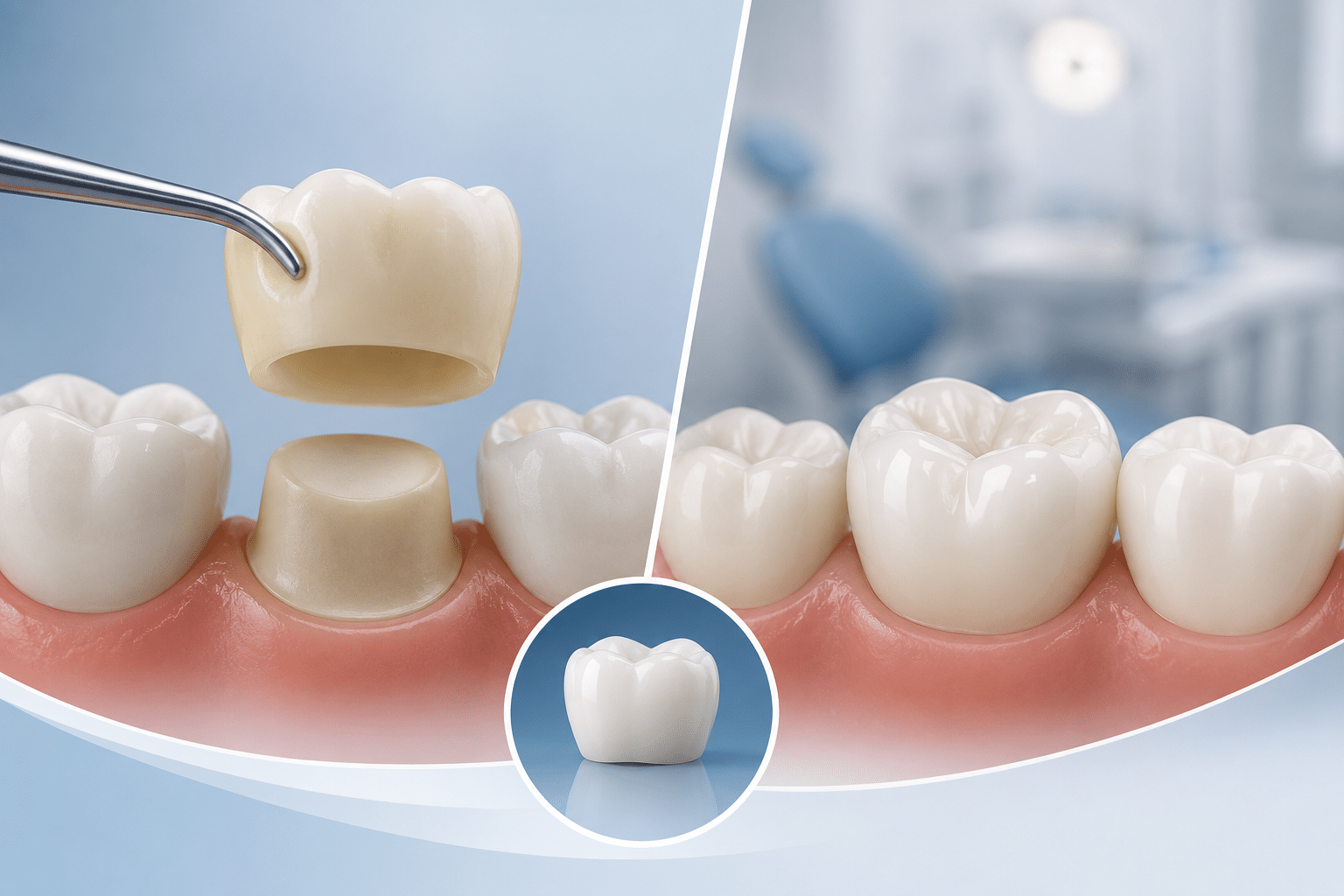

A temporary crown is a short-term placeholder made from acrylic or composite resin, designed to protect your tooth for a few weeks. A permanent crown is a custom-made restoration built from porcelain, zirconia, or metal, designed to last a decade or longer. The core difference between temporary and permanent crowns comes down to purpose: one protects while you wait, the other restores for the long run.
Key Takeaways
- A temporary crown protects the prepared tooth for one to three weeks while a lab makes the permanent one.
- Temporary crown material used by dental labs is acrylic or composite resin, which is softer and less precise than a permanent crown.
- Permanent crowns are made from porcelain, ceramic, zirconia, or metal alloys and last 5 to 15 years or longer with good care.
- A tooth crown is a permanent fixture once cemented, but it is not indestructible and may eventually need to be replaced.
- Same-day (CEREC) crowns skip the temporary step entirely and deliver a permanent crown in one visit.
- Replacing a temporary crown with a permanent one is a quick, painless appointment in which the dentist removes the temporary crown and bonds the final crown.
What is a Temporary Crown?
A temporary crown is a protective cap placed over a prepared tooth while a dental lab custom-makes the permanent one. After your dentist shapes the tooth and takes an impression or digital scan, the tooth needs coverage. The temporary crown shields it from sensitivity, bacteria, and shifting while you wait.
Temporary crowns are made from acrylic or composite resin. These materials are quick to shape chairside, but they are softer and less detailed than permanent materials. They are attached with weak cement on purpose, so your dentist can remove them easily at the next visit.
Because the temporary crown material used by dental labs and offices is not designed for long-term wear, a temporary crown should stay on for one to three weeks at most. Leaving it longer raises the risk of the cement breaking down, the crown loosening, or decay starting underneath.
What Does a Temporary Crown Look Like?
What does a temporary crown look like compared with a real tooth? It is close but not a perfect match. Temporary crowns are usually a generic shade of white or off-white, since they are made quickly from a limited color range. The surface is smoother and less textured than natural enamel, and the edges may not sit as tightly against the gum as a permanent crown does.
Side by side, a temporary crown may look slightly bulkier or flatter than the adjacent tooth. It does the job cosmetically for a few weeks, but it is not shaped or shaded with the precision of a permanent restoration. Most people can tell the difference up close, though from a normal conversation distance it blends in well enough.
What is a Permanent Crown?
A permanent crown is a custom-made cap designed to restore a damaged tooth’s shape, strength, and appearance for years. Cleveland Clinic describes a crown as a restoration that fits over the entire tooth and is used to treat decayed, broken, or worn-down teeth, with a lifespan of five to fifteen years depending on material and care.
Permanent crowns are made from porcelain, all-ceramic materials, zirconia, porcelain-fused-to-metal, or metal alloys such as gold. Each has trade-offs:
- Porcelain and all-ceramic look the most natural and suit front teeth well, but can chip under heavy force.
- Zirconia combines strength and a tooth-like color, making it a popular choice for both front and back teeth.
- Porcelain fused to metal is strong and reasonably natural-looking, though the metal edge can show at the gumline over time.
- Gold and metal alloys are the most durable and gentlest on opposing teeth, but they do not match tooth color.
A lab technician or a CAD/CAM milling machine crafts the crown from your impression, matching your bite, your shade, and the shape of the surrounding teeth. Once cemented with permanent adhesive, a tooth crown is a permanent fixture on that tooth.
Temporary Crown vs Permanent Crown: the Full Comparison
The core differences between temporary and permanent crowns include material, fit, strength, appearance, and longevity. Because the material dental offices use is designed to come off easily, every aspect of a temporary crown is lighter-duty than its permanent counterpart. This table puts them side by side.
| Feature | Temporary crown | Permanent crown |
| Material | Acrylic or composite resin | Porcelain, zirconia, ceramic, metal, or combinations |
| Lifespan | 1 to 3 weeks | 5 to 15+ years |
| Fit | Generic, approximate | Custom-made from your impression |
| Color match | Close but not precise | Shade-matched to your teeth |
| Strength | Soft, can crack or chip easily | Strong, built for daily chewing |
| Cement | Weak (designed for easy removal) | Permanent adhesive |
| Cost | Included in the crown procedure | The main cost of the procedure |
When people ask about a temporary crown vs. a permanent crown, the simplest answer is that one is a placeholder and the other is the restoration. A temporary crown does not chew, look, or last as long as a permanent one. Mayo Clinic explains that a crown restores a tooth’s shape and size and strengthens it, which is the job only the permanent version is built to do. Everything in the temporary crown vs permanent crown comparison traces back to that single fact.
Are Crowns Permanent?
Are crowns permanent in the sense that they last forever? No. A permanent crown is called “permanent” because it is cemented with a lasting adhesive and is intended to stay in place for years, unlike a temporary one that comes off in weeks. But no dental restoration is truly lifelong.
The ADA explains that crowns are custom-made covers that restore a tooth’s shape and strength, and with good care, they can last many years, though wear, decay at the margins, or a fracture can eventually mean replacement.
So a tooth crown is a permanent fixture in the practical sense: it stays on, you eat and brush with it normally, and it does not come out. With regular checkups and good hygiene, many crowns last well beyond a decade. Grinding, poor oral care, or biting hard objects shorten that span.
What Happens When Replacing a Temporary Crown With a Permanent One?
Replacing a temporary crown with a permanent one is straightforward and usually painless. Your dentist removes the temporary by gently prying it off (the weak cement makes this easy), cleans the prepared tooth, checks the fit and shade of the permanent crown, and bonds it in place with permanent cement. The whole appointment often takes 30 minutes or less.
After the permanent crown is seated, your dentist checks your bite and adjusts any high spots. Mild sensitivity for a few days is normal as the tooth settles under the new crown.
Can you Skip the Temporary Crown Entirely?
Yes, if your dentist uses same-day crown technology. A CAD/CAM system like CEREC scans your tooth digitally, designs the crown on screen, and mills it from a ceramic block while you wait. The entire process, from preparation to permanent crown, happens in a single visit.
At Lincolnwood Family Dental, a women-led practice ranked number one in Lincolnwood for August 2025 with more than 700 five-star reviews, the in-house CEREC system delivers same-day crowns without a temporary. That means no waiting weeks, no second appointment, and no risk of a temporary loosening or breaking in the meantime. Dr. Sana Baig handles the full process from scan to final crown in one sitting.
Nearly 90% of adults ages 20 to 64 have had tooth decay, according to the National Institute of Dental and Craniofacial Research, so crowns are one of the most common restorations placed. Whether you go the traditional two-visit route or choose a same-day option, a general dentistry exam determines which approach fits your tooth. You can book a visit or call 847-610-9272.
How to Care for Both Types of Crowns
Caring for a temporary crown means being gentle. Avoid sticky, hard, and chewy foods, chew on the opposite side, and brush carefully around it. If it loosens or comes off, call your dentist to have it recemented rather than leaving the tooth exposed.
Caring for a permanent crown is simpler: brush and floss as you would a natural tooth, see your dentist for regular preventive checkups, and avoid using your teeth as tools. A crown protects the tooth underneath, but decay can still form at the margin where the crown meets the gum if plaque builds up.
Frequently Asked Questions
How long does a temporary crown last?
A temporary crown is designed to last one to three weeks, just long enough for the lab to make your permanent crown. It can hold longer in a pinch, but extended wear increases the risk of loosening, cement breakdown, and decay beneath the surface.
What does a temporary crown look like compared to a permanent one?
A temporary crown is a generic shade of white with a smoother, less detailed surface. A permanent crown is custom shade-matched and shaped to blend with your natural teeth, so the difference in appearance is noticeable up close.
Are crowns permanent, or do they need to be replaced?
A permanent crown is cemented to stay, but it is not truly lifelong. Most last 5 to 15 years, and some go longer with good care. Grinding, decay at the edge, or a fracture can mean eventual replacement. Regular dental visits help catch problems early.
Does getting a crown hurt?
The procedure is done under local anesthesia, so you feel pressure but not pain. Mild sensitivity for a few days after is normal. If you choose a same-day CEREC crown, you also skip the second appointment, which means one round of numbing instead of two.
What is the difference between a crown and a veneer?
A crown covers the entire tooth and restores strength, while a veneer covers only the front surface and is mainly cosmetic. Crowns suit damaged or weakened teeth; veneers suit teeth that are structurally sound but need a cosmetic upgrade.
This article is for general information and is not a substitute for professional dental advice. Ask your dentist whether a crown is the right restoration for your tooth.