

A professional teeth cleaning can make your teeth look brighter, but it does not truly whiten them. A cleaning removes plaque, tartar, and surface stains from coffee, tea, and tobacco, which uncovers your natural tooth color. It does not change that underlying color. To go lighter than your natural shade, you need a whitening treatment, which uses peroxide to bleach the tooth. So does teeth cleaning whiten teeth? It brightens, it does not bleach.
Key Takeaways
- A dental cleaning removes surface stains and tartar, so teeth often look brighter, but it does not change their natural color.
- Whitening, also called bleaching, uses hydrogen or carbamide peroxide to lighten teeth beyond their natural shade, which a cleaning cannot do.
- The real difference between cleaning and whitening is stain removal versus color change.
- In-office whitening can use a peroxide gel alone or with a light or laser, but the peroxide does the actual work.
- Stains deep inside the tooth, such as gray or tetracycline stains, may not bleach and sometimes need veneers.
- Regular cleanings keep clean, white teeth looking their best and help any whitening last longer.
Does Teeth Cleaning Whiten Teeth?
No, not in the true sense, although it often makes teeth look noticeably brighter. Whiter teeth are one of the most wanted upgrades to a smile. When the American Academy of Cosmetic Dentistry surveyed people about their smiles, the most common thing they wanted to improve was whiter teeth. A cleaning helps with that by clearing away what sits on top of the enamel.
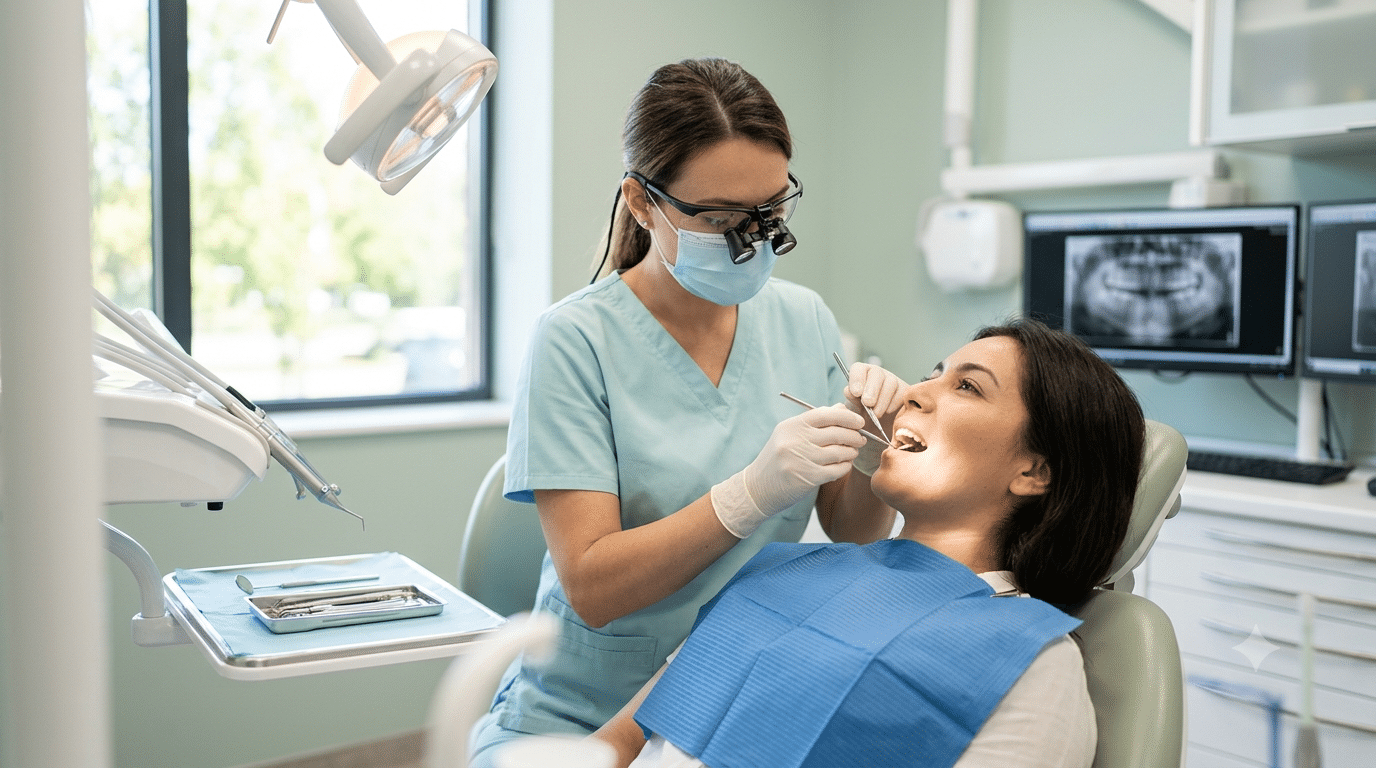
During a cleaning, your hygienist removes plaque and hardened tartar, then polishes the teeth. This lifts surface stains, known as extrinsic stains, from coffee, red wine, tea, and tobacco. The American Dental Association notes that extrinsic stains can be reduced with a professional cleaning. What a cleaning cannot do is change the color built into the tooth itself. So does teeth cleaning whiten teeth beyond their natural shade? No. It reveals the natural shade you already have.
What Causes Teeth to Stain?
Stains fall into two groups, and the difference decides what will actually help. Extrinsic stains sit on the surface and come from coffee, tea, red wine, cola, tobacco, and everyday plaque. These are the stains a cleaning lifts. Intrinsic stains form inside the tooth, from aging, injury, too much fluoride in childhood, or medicines like tetracycline. These do not wipe away and need bleaching or, in stubborn cases, veneers.
Knowing which type you have explains why two people can get the same cleaning and see very different results. If your discoloration is mostly surface stain, a cleaning can brighten it a lot. If the color is built into the tooth, you will need whitening or a cosmetic option to change it.
What is the Difference Between Cleaning and Whitening?
The difference between cleaning and whitening comes down to stain removal versus color change. A cleaning takes off what is stuck to the surface. Whitening changes the color of the underlying tooth structure.
Here is how the three terms compare.
| Treatment | What it does | Changes natural tooth color? |
| Professional cleaning | Removes plaque, tartar, and surface stains | No |
| Whitening (broad sense) | Removes surface stains, sometimes with mild peroxide | Minimally |
| Bleaching | Uses peroxide to lighten the tooth itself | Yes |
Treating cleaning and whitening as one step is a common mix-up, because they solve different problems. A cleaning protects your gums and teeth and brightens by removing buildup. Whitening is cosmetic and lightens the shade. Many people get the best result by pairing the two, a combination sometimes searched as clean teeth whitening: a cleaning first to clear the surface, then whitening on a fresh canvas.
Teeth Whitening vs Teeth Bleaching: Are They the Same?
Almost, but not exactly. In everyday speech, teeth whitening and teeth bleaching describe the same goal: a lighter smile, and people use the terms interchangeably. Dentists draw a finer line. Whitening, in the broad sense, means restoring the tooth’s color by removing surface stains. Bleaching means using peroxide to lighten teeth past their natural shade.
The Journal of the American Dental Association explains that when peroxide is used, the process is referred to as bleaching, a chemical reaction rather than simple stain removal. So most products labeled “whitening” that actually lighten your shade are technically bleaching. For teeth whitening vs teeth bleaching, the practical rule is simple: if it contains peroxide, it bleaches; if it only scrubs the surface, it whitens.
Teeth Whitening Laser or Bleach: Which Works in the Office?
Both rely on the same active ingredient. When you choose teeth whitening laser or bleach at the dentist, the lightening comes from a peroxide gel either way. With standard in-office bleaching, the dentist applies a strong peroxide gel and shields your gums. The Cleveland Clinic notes that in-office bleaching takes about an hour. With laser or light whitening, a light or laser is aimed at the gel to speed up the reaction.
So, for teeth whitening, laser or bleach, the difference is the accelerator, not the outcome. Research on whether the light meaningfully improves the final shade is mixed, since the peroxide is what lightens the tooth. Custom take-home trays from your dentist use a milder peroxide over days or weeks, reaching a similar endpoint more slowly.
Should you Clean or Whiten First?
Clean first, then whiten. A cleaning clears the surface so peroxide can reach the enamel evenly, which is why dentists often suggest a clean teeth-whitening sequence rather than whitening over plaque and tartar, which can leave patchy results. A white cleaning teeth visit also lets your dentist check that your gums and teeth are healthy before you lighten the shade. Clear the surface first, confirm everything is healthy, then whiten. That order gives the most even and longest-lasting color.
How to get Clean White Teeth That Last
The most reliable path to clean, white teeth is straightforward: keep up with regular cleanings, whiten when you want a lighter shade, and protect the results at home. Professional cleaning every six months removes surface stains that dull a smile.
People searching for white-cleaning teeth options usually land on this pairing because a cleaning and a whitening treatment do different jobs that complement each other. After whitening, cut back on coffee, tea, red wine, and tobacco, or rinse and brush soon after. Whitening is not permanent, and stains can return within months without upkeep. A steady white cleaning teeth routine at home, combined with dentist visits, keeps a smile brighter for longer.
Some stains will not respond to bleaching at all. Gray tones, tetracycline staining, and discoloration inside the tooth often call for a cosmetic option, such as porcelain veneers, rather than whitening. Whitening also does not work on crowns, veneers, or fillings, so those may need to be matched or replaced to blend in.
At Lincolnwood Family Dental, a women-led practice ranked number one in Lincolnwood for August 2025, professional cleanings and teeth whitening are handled under one roof, making a clean teeth whitening plan easy to book together. New patients can start with an $89 comprehensive exam and cleaning. Dr. Sana Baig, a general and cosmetic dentist, can check whether your stains will bleach or need another approach, then you can book a visit or call 847-610-9272.
Frequently Asked Questions
Does a dental cleaning make your teeth whiter?
It can make them look whiter by removing surface stains and tartar, but it does not lighten the tooth’s natural color. For a shade lighter than your own, you need a whitening or bleaching treatment. Many people notice a brighter smile right after a cleaning simply because the buildup is gone.
Is teeth whitening vs teeth bleaching just a marketing difference?
Mostly. Teeth whitening vs. teeth bleaching often refers to the same peroxide treatment. Technically, bleaching changes the natural color using peroxide, while whitening can also refer to removing surface stains. If a product lightens your shade, it is bleaching.
Is laser teeth whitening or bleaching better?
For most people, the result is similar, since teeth whitening lasers or bleaching both rely on a peroxide gel. The light or laser aims to speed the process, not change the final shade. A dentist can advise whether a light-assisted or tray approach suits your teeth and sensitivity.
How long does a whitening treatment last?
It varies. Whitening is not permanent, and stains can start to return within a few months, faster if you drink a lot of coffee, tea, or red wine. Regular cleanings and good home care help keep teeth clean and white between treatments.
Can whitening damage my teeth?
Used as directed, professional whitening is considered safe. The most common side effects are temporary tooth sensitivity and gum irritation. A dentist-supervised treatment lowers the risk, which is one reason a checkup before whitening is worth the step.
This article is for general information and is not a substitute for professional dental advice. Ask your dentist which option is right for your teeth.