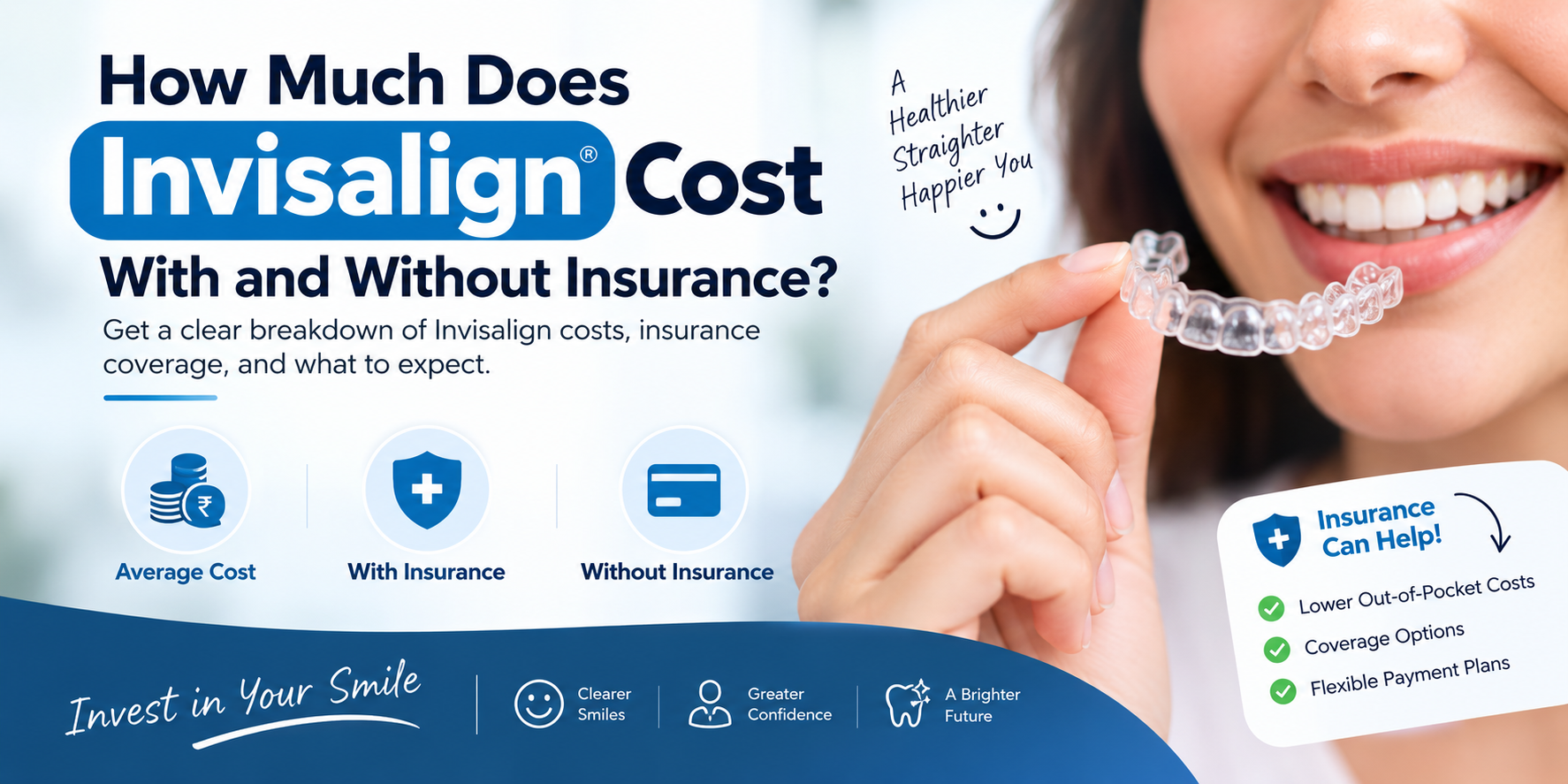

Invisalign cost without insurance typically ranges from $1,800 to $9,500. The exact number depends on your case. Most adults pay between $3,500 and $7,000 for a full treatment plan.
Your price depends on two things. First, how many aligner trays you need. Second, how long your treatment takes.
With dental insurance, many patients pay $2,000 to $5,000 out of pocket. Coverage varies by plan, so a consultation and insurance check give you your real number.
At Lincolnwood Family Dental, we hold Diamond Plus status. This is the top tier Invisalign awards providers based on case volume and experience. That matters when you compare quotes from different practices.
Below, you will find current pricing data. You will also see what drives your specific cost, plus how insurance and financing can lower it.
Invisalign Cost Without Insurance
Without insurance, Invisalign usually costs between $1,800 and $9,500 for the full treatment. According to CareCredit’s national research, the average cost of clear aligners nationwide is $5,108. In Illinois specifically, that average runs slightly higher, at $5,238.
Mild cases with minor spacing fall on the lower end of this range. Complex bite corrections need more aligners and a longer timeline. This pushes the price toward the top.
How Much Does Invisalign Cost? Pricing by Case Complexity
Case complexity is the single biggest factor in your final price. Here is what most patients can expect:
| Case Type | Typical Treatment Length | Estimated Cost |
| Mild (minor spacing or crowding) | 3 to 6 months | $1,800 to $3,500 |
| Moderate (noticeable crowding or bite issues) | 6 to 12 months | $3,500 to $6,000 |
| Complex (significant bite correction) | 12 to 24 months | $6,000 to $9,500 |
Invisalign Express is a shorter option for minor corrections. It generally falls at the low end of this range. Full Invisalign Comprehensive treatment covers moderate to complex cases and uses more aligners over a longer period.
Average Cost of Invisalign for Adults vs Teens
The average cost of Invisalign for adults tends to run higher than for teens. Adult cases often involve bite issues that developed over years. Adults may also need coordination with existing crowns or bridges before treatment starts.
Full adult treatment averages around $5,700. The typical range runs from $3,500 to $9,500. Teen treatment averages closer to $3,000, generally between $2,000 and $5,000. Growing jaws in teens sometimes allow for a simpler, shorter plan.
What Affects Your Invisalign Price
Several factors combine to set your final Invisalign price:
Case complexity. More misalignment means more aligner trays and a longer plan.
Treatment length. Plans running 18 to 24 months cost more than 6-month plans. Longer treatment means more office visits and check-ins along the way.
Provider experience and tier. Providers with higher Invisalign tiers, like Diamond Plus, have treated more cases. This experience can mean fewer refinements and a smoother process overall.
Geographic location. Costs in the Chicago area track close to the Illinois average. This is generally higher than rural regions but often lower than major coastal cities.
What’s included. Some practices bundle retainers, refinements, and follow-up visits into one price. Others charge separately for each. Always ask what your quote actually covers before signing on.
Invisalign vs Braces Cost: Which Costs More?
Invisalign vs braces cost comparisons show the two options sit closer together than most people expect.
| Factor | Invisalign | Traditional Metal Braces |
| Typical cost | $1,800 to $9,500 | $3,000 to $7,500 |
| Treatment time | 6 to 24 months | 14 to 33 months |
| Visibility | Nearly invisible | Visible metal brackets |
| Removability | Removable for eating | Fixed to teeth |
| Office visits | Every 6 to 10 weeks | Every 6 to 10 weeks |
Braces sometimes cost less for very complex cases. They can handle severe misalignment without needing extra aligner sets. Invisalign often wins on comfort and appearance instead. This is why many adults choose it, even at a similar price point.
Cost of Invisalign Without Insurance vs With Insurance
The cost of Invisalign without insurance versus with insurance can differ by thousands of dollars.
| Scenario | Typical Out-of-Pocket Cost |
| Without insurance | $1,800 to $9,500 |
| With insurance | $2,000 to $5,000 |
| Average insurance contribution | Up to $3,000 |
Insurance rarely covers the full treatment cost. Most plans with orthodontic benefits pay a percentage, or a fixed dollar amount. This is usually capped as a lifetime maximum. Once you use that maximum, it does not renew, even years later.
Does Insurance Cover Invisalign? What to Ask First
Many dental insurance plans cover Invisalign the same way they cover braces. Coverage is not universal, though. Confirm these details before you start treatment.
- Does your plan include a separate orthodontic benefit?
- What is your lifetime orthodontic maximum?
- Does your plan cover clear aligners the same as braces?
- Are there age restrictions on orthodontic coverage?
- Has any of your orthodontic benefit already been used?
Our team can verify your specific PPO insurance benefits before you commit to a plan. This avoids surprise bills partway through treatment.
Invisalign Payment Plans and Financing Options
If insurance does not cover the full cost, a few options can help.
- Monthly payment plans. Many practices spread your remaining balance over 12 to 24 months.
- HSA or FSA funds. Invisalign qualifies as an eligible expense under most health savings and flexible spending accounts.
- Third-party financing. Companies like CareCredit offer promotional interest-free periods for qualified patients.
- In-house financing. Some practices offer their own plans with a down payment and fixed monthly installments.
A $5,500 treatment plan, financed over 18 months after a modest down payment, often lands near $200 to $300 per month.
Hidden Costs to Ask About Before You Start
A few extra costs catch patients off guard if nobody mentions them upfront. Ask about each of these during your consultation.
Refinement aligners. If your teeth do not shift exactly as planned, you may need extra trays near the end of treatment. Some practices include refinements in the original price. Others bill them separately.
Lost or damaged aligners. Replacing a lost tray can cost $75 to $300, depending on your provider’s policy. A few practices include one or two free replacements in the total fee.
Retainers after treatment. You will need a retainer once your active treatment ends. This sometimes comes bundled with your quote, and sometimes runs $100 to $300 as a separate charge.
Pre-treatment dental work. Cavities, gum disease, or old fillings sometimes need attention before Invisalign can start. This work is billed separately from your aligner cost.
How Lincolnwood Family Dental Prices Invisalign
Every Invisalign quote at our practice starts with a free consultation. We use our iTero Element scanner to take a 3D digital scan of your teeth. This replaces uncomfortable physical impressions and gives us a precise view of your case before we quote a price.
As a Diamond Plus Invisalign provider, our team has completed a high volume of cases. This spans mild, moderate, and complex treatments across all age groups. We are in-network with most PPO dental insurance plans. Our staff verifies your specific orthodontic benefit before treatment begins, not after you are already committed.
We also offer flexible financing and payment plans to fit different budgets. Ask about current offers during your Invisalign consultation, since promotions change throughout the year. If you want to see your specific cost, schedule a visit and we will walk you through a real quote.
Frequently Asked Questions
Is Invisalign worth the cost compared to braces?
For many adults, yes. Invisalign costs a similar amount to braces. It also offers removability and a nearly invisible appearance, which matters for daily comfort.
Can I use my HSA or FSA to pay for Invisalign?
Yes, Invisalign counts as a qualified medical expense under most HSA and FSA plans. Using these accounts lowers your effective cost since the funds are tax-free.
How much does Invisalign cost without insurance per month with financing?
Monthly payments typically range from $100 to $300. The exact figure depends on your total treatment cost, down payment, and financing term length.
What happens if my Invisalign price quote seems high compared to online averages?
Ask your provider what the quote includes. Retainers, refinements, and follow-up visits sometimes fall inside one price and sometimes do not.
Does the cost of Invisalign without insurance include retainers after treatment?
This varies by practice. Some include a first set of retainers in the total price. Others bill retainers separately, so always confirm this upfront.